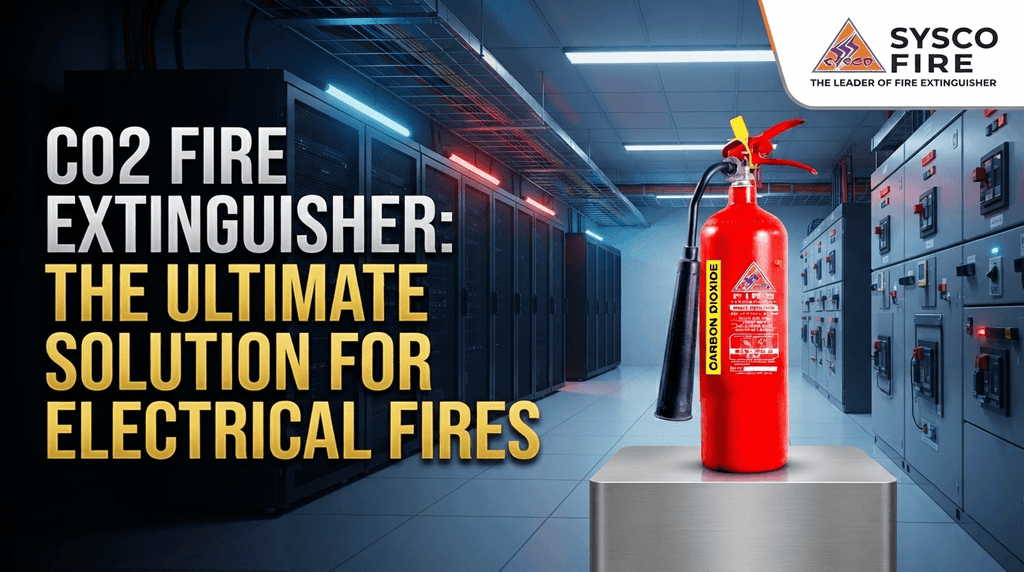
When dealing with a fire hazard involving live electrical equipment, switchboards, transformers, or high-density server rooms, traditional fire extinguishing methods can often cause as much destruction as the fire itself. Water-based extinguishers create an immediate, fatal electrocution hazard, while standard dry chemical powder extinguishers leave behind a corrosive, moisture-attracting dust that permanently ruins delicate microcircuitry.
In these high-stakes environments, facility managers, electrical engineers, and IT professionals rely on a specialized champion of clean fire suppression: the CO2 Fire Extinguisher.
Frequently designated by its bright red cylinder and distinctive horn-shaped discharge nozzle, a Carbon Dioxide (Karbondioksida) APAR is engineered specifically to suppress electrical and flammable liquid fires safely, instantly, and without leaving a single trace of residue.
In this comprehensive guide, we will explore the physics behind carbon dioxide suppression, why it remains the undisputed gold standard for electrical fires (Class C or Class E), its critical zero-residue advantage, and vital safety protocols for deployment.
Table of Contents
The Physics of Suppression: How a CO2 Extinguisher Works
To understand why carbon dioxide is so effective against electrical blazes, we must examine how it alters the fire environment. A CO2 extinguisher stores carbon dioxide gas inside a heavy-duty, seamless steel cylinder under immense pressure—typically around 750 to 850 psi (pounds per square inch) at room temperature.
When the operating lever is squeezed, the liquid carbon dioxide rushes up the siphon tube and through the discharge horn, where it rapidly expands and converts into a mixture of freezing gas and dry ice snow (at temperatures reaching 78.5 C or -109.3 F.
The extinguisher attacks the fire through two powerful mechanisms:
- Oxygen Displacement (Smothering): Normal combustion requires an atmospheric oxygen concentration of at least 15% to 16% to sustain flames. Carbon dioxide is much heavier than air. When discharged into a fire zone, the dense CO2 gas blankets the fuel source, rapidly displacing the surrounding oxygen and dropping concentrations below the threshold required to sustain combustion. Starved of oxygen, the fire instantly collapses.
- Intense Thermal Cooling: The ultra-cold discharge temperature instantly cools the burning fuel and surrounding surfaces, absorbing heat energy and preventing reignition.
Why CO2 is the Gold Standard for Electrical Fires (Class C / Class E)
Electrical fires present unique hazards because the fuel source is energized electricity. Using the wrong suppression agent can result in catastrophic electrical shock, equipment explosion, or short-circuiting.
CO2 extinguishers excel in these environments due to several unique properties:
- Non-Conductive Properties: Carbon dioxide gas is an exceptional electrical insulator. Unlike water or conductive chemical solutions, pure CO2 does not conduct electrical current back toward the user or through live circuitry. This allows firefighters or technicians to spray a live electrical panel or transformer safely without risking fatal electrocution.
- No Thermal Shock to Heavy Hardware: While the discharge is extremely cold, the gas dissipates instantly across large industrial switchgears and heavy electrical equipment without warping robust metallic enclosures or destroying high-voltage components.
The Zero-Residue Advantage: Protecting Critical Assets
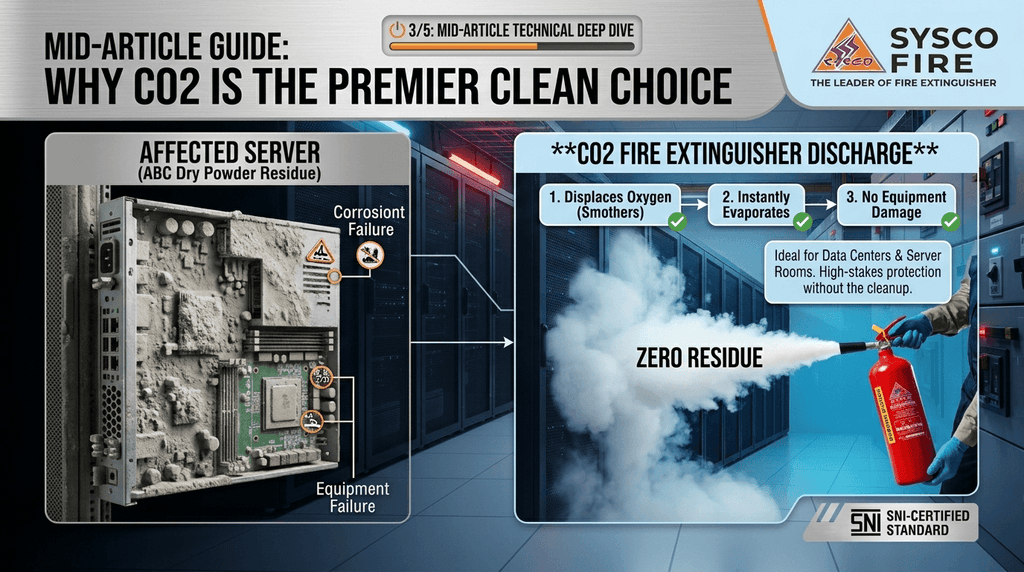
The greatest selling point of a CO2 fire extinguisher—particularly in modern commercial buildings, server rooms, and telecommunication centers—is its zero-residue capability.
| Feature / Metric | ABC Dry Chemical Powder | CO2 (Carbon Dioxide) |
| Residue Left | Heavy, acidic, caking dust | Absolute Zero Residue |
| Electrical Safety | Conductive when humid | Non-Conductive Gas |
| Server Room Suitability | Disastrous (Corrodes chips) | Ideal / Industry Standard |
| Cleanup Required | Extensive industrial vacuuming & chemical washing | None (Evaporates into air) |
| Primary Target | General offices, warehouses | Electrical rooms, server racks, labs |
When an ABC Dry Chemical Powder extinguisher is discharged in an IT room, the fine Monoammonium Phosphate powder settles into every server fan, hard drive housing, and motherboard port. As detailed in our previous technical guides, that powder absorbs ambient moisture, forms an acidic crust, and destroys the hardware.
By contrast, carbon dioxide is a clean agent. Once the CO2 gas has suppressed the flames and dissipated into the atmosphere, it leaves behind zero liquid, zero dust, and zero chemical residue. Hard drives remain readable, circuit boards remain corrosion-free, and businesses can resume normal operations within minutes of ventilation.
Limitations and Critical Safety Considerations
Despite its immense advantages, carbon dioxide is a specialized tool and must be used with a thorough understanding of its operational limitations:
- Risk of Suffocation in Confined Spaces: Because CO2 displaces oxygen, discharging a large CO2 extinguisher in a small, unventilated, completely sealed room can rapidly reduce oxygen levels to dangerous, life-threatening levels. Operators must evacuate enclosed spaces immediately after discharge.
- Ineffective on Solid Combustibles (Class A): CO2 is highly effective for electrical and liquid fires, but it is generally poor at suppressing deep-seated Class A fires (such as burning wood, paper, or textiles). The high-velocity gas jet can blow burning embers around, and because the gas dissipates quickly, it may not provide enough continuous cooling to prevent embers from reigniting once oxygen returns.
- Extreme Discharge Temperatures: The discharge horn of a CO2 extinguisher becomes extremely cold during operation—often dropping below -70 C Modern CO2 extinguishers feature an insulated grip or a horn with a protective handle, but operators must never grab the bare metal horn directly during discharge to prevent severe frostbite or skin freezing.
Ideal Installation Environments for CO2 APARs
To maximize safety and regulatory compliance (such as NFPA 10 standards), facility managers should strategically position CO2 extinguishers in zones with high electrical concentrations:
- Data Centers and Server Rooms: Protecting expensive blade servers, network switches, and data storage arrays.
- Electrical Substation and Switchgear Rooms: Shielding high-voltage circuit breakers and power distribution units.
- Industrial Manufacturing Lines: Protecting automated robotic control panels, CNC machinery, and electrical motor control centers (MCC).
- Laboratories and Research Facilities: Safeguarding sensitive analytical equipment, electrical testing benches, and chemical processing consoles.
Conclusion
Electrical fires require precision, speed, and specialized extinguishing agents that do not compound the emergency with secondary damage. The CO2 Fire Extinguisher remains the ultimate, unrivaled solution for protecting live electrical installations and sensitive IT infrastructure. By utilizing the power of oxygen displacement and rapid thermal cooling, carbon dioxide suppresses dangerous blazes instantly while leaving behind absolute zero residue—saving thousands of dollars in potential equipment damage and ensuring maximum business continuity.
Baca juga : Metode APAR TATS K3: 4 Langkah Praktis Menggunakan APAR dengan Aman dan Tepat.
Secure Your Electrical Assets with Certified Fire Safety Solutions
Do not let sub-par fire protection risk your critical server infrastructure and electrical assets. Equip your facility with high-performance, SNI-certified CO2 and Clean Agent fire extinguishers engineered for maximum reliability and safety.
- Explore Advanced Fire Safety Engineering: Visit our official manufacturer website at https://sysco-fire.co.id.
- Browse Our CO2 & Clean Agent APAR Catalog: Find specialized fire suppression equipment built for electrical and electronic rooms at https://sysco-fire.co.id/apar-alat-pemadam-api-kebakaran.
- Consult Our Fire Safety Specialists: Need expert guidance on sizing, placement, or compliance for your facility’s electrical rooms? Connect directly with our technical team via WhatsApp at +62 852-5711-4711 or click here to redirect to our official service desk: https://sysco-fire.co.id/cs.