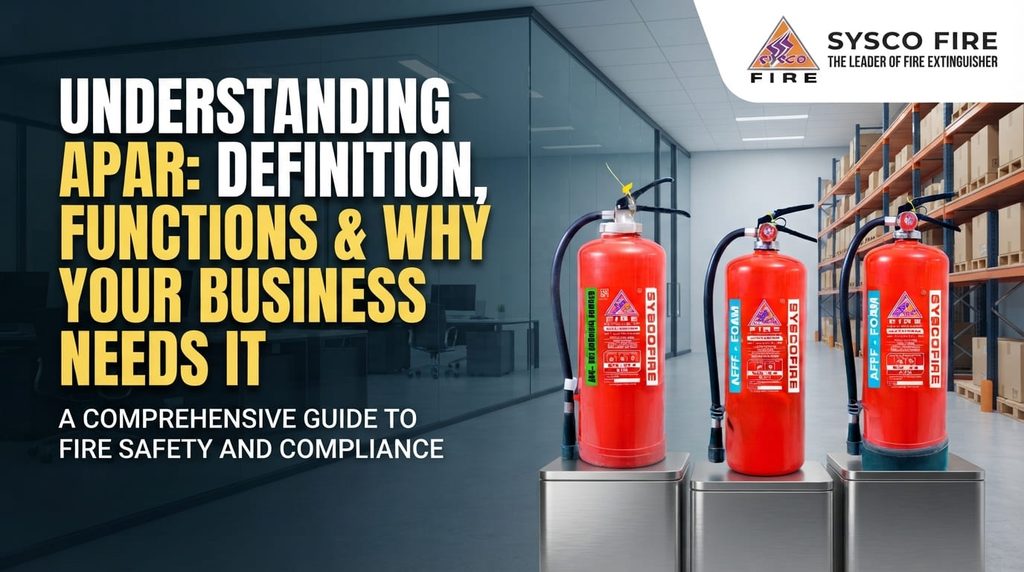
Fire is a fickle element. In a controlled environment, it drives industry, cooks our food, and provides warmth. However, when it breaks free from control, it becomes one of the most destructive forces on earth. For business owners, a fire doesn’t just represent property damage; it threatens employees’ lives, disrupts operations, jeopardizes critical data, and can lead to total bankruptcy.
While massive, automated fire suppression systems like sprinklers and hydrants are essential for large-scale protection, the vast majority of fires start small. In those critical first few minutes, a portable, immediate solution is needed. That solution is the APAR (Alat Pemadam Api Ringan), known universally in English as the Portable Fire Extinguisher.
Understanding what an APAR is, how it functions, and why it is not merely an option—but a necessity—is the first step toward building a resilient business.
Table of Contents
What is an APAR? Definition and Core Concept
APAR stands for Alat Pemadam Api Ringan, which translates literally to “Lightweight Fire Extinguishing Tool.” By definition, an APAR is a self-contained, portable device designed to extinguish small, nascent-stage fires.
The operative word here is “nascent.” An APAR is not meant to fight a raging inferno that has enveloped a room. It is designed for the immediate response—the moment a trash can ignites from a discarded cigarette, or a piece of machinery shorts out and starts sparking.
Structurally, an APAR consists of a pressurized cylinder containing an extinguishing agent (such as powder, gas, or foam), a valve mechanism, a safety pin, and a nozzle or hose to direct the agent. They are designed to be operated by a single person without specialized firefighting training, making them the most accessible form of active fire protection available.
The Vital Functions of APAR in Active Fire Protection
The function of an portable fire extinguisher goes beyond simply putting out a fire. When strategically placed and maintained, it serves several critical roles in a comprehensive safety strategy:
1. Immediate Suppression of Small Fires
This is the primary function. By attacking a fire in its first few seconds or minutes, an APAR can completely extinguish the blaze before it gains enough heat and fuel to spread. This immediate action saves lives and keeps property damage minimal.
2. Preventing the Spread of Fire
Even if an APAR cannot completely extinguish a blaze (perhaps because the fire type doesn’t perfectly match the extinguisher agent), its use can significantly slow the fire’s growth. This retardation buys precious time for the fire department to arrive and take over.
3. Creating Escape Paths
In some scenarios, the function of an APAR isn’t to save the building, but to save its occupants. If a fire blocks a critical exit corridor or stairwell, a fire extinguisher can be used to knock down the flames temporarily, allowing employees and visitors to escape safely.
4. Psychological Security
Knowing that functioning APARs are readily available provides a sense of security to employees and stakeholders. It demonstrates that the management takes safety seriously, creating a more stable work environment.
Understanding Classes of Fire and Corresponding Agents
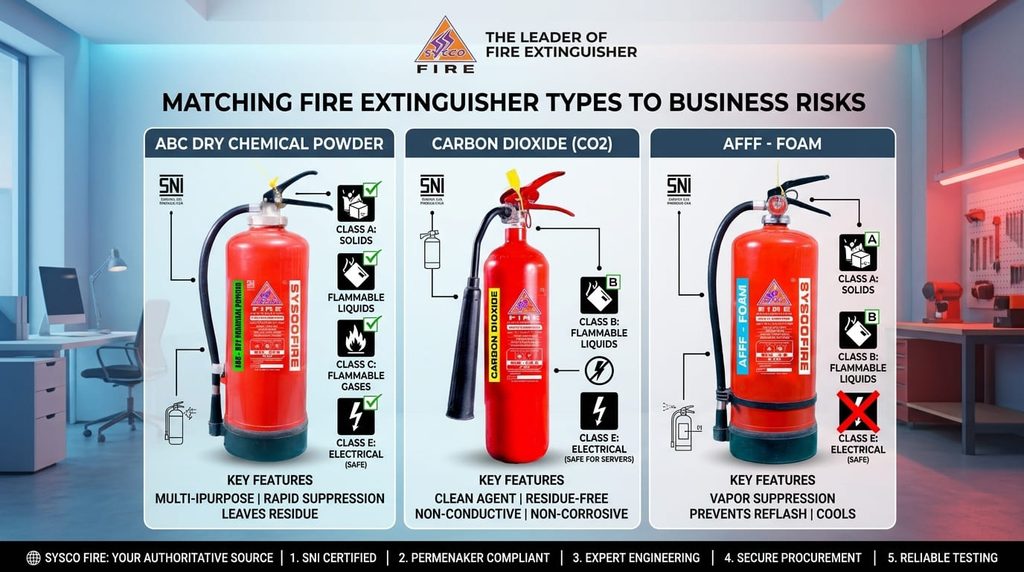
To truly “recognize” an APAR, one must understand that different fires require different extinguishing agents. Attempting to use the wrong agent on a fire can be useless or, in some cases, extremely dangerous. This expertise is crucial for selecting the right units for your business.
Fire science classifies fires based on the fuel source:
- Class A (Ordinary Solids): Wood, paper, cloth, rubber, and plastics.
- Class B (Flammable Liquids): Gasoline, diesel, oil, paint, and solvents.
- Class C (Flammable Gases): Methane, propane, and butane. (Sometimes categorized under Class B).
- Class E (Electrical Fires): Live electrical equipment, computers, and switchboards. (Technically not a separate class in all standards, but requires non-conductive agents).
- Class F/K (Cooking Oils & Fats): Commercial kitchen fires.
APARs are manufactured with specific agents tailored to these classes:
- Dry Chemical Powder (ABC Powder): The most common “multi-purpose” extinguisher. Effective on A, B, and C fires, and non-conductive (safe for electrical), but leaves a messy residue that can damage sensitive electronics.
- Carbon Dioxide (CO2): A clean gas that removes oxygen. Ideal for Class B and Electrical fires. It leaves no residue, making it perfect for server rooms and offices, but is ineffective on Class A fires (it has no cooling effect).
- Foam (AFFF): Creates a barrier between the fuel and oxygen. Excellent for Class A and B fires. Highly effective on fuel spills. Danger: Never use standard foam on electrical fires, as it is water-based and conductive.
- Clean Agent (Liquid Gas): Non-conductive, non-corrosive, and leaves no residue. Ideal for high-value electronic assets.
Why Your Business is Mandated to Own Them: Safety, Law, and Operations
If you are a business owner in Indonesia, owning APARs is not an optional “good deed.” It is a fundamental requirement of modern business operations. Here is why:
1. Moral and Operational Safety: Protecting Lives and Assets
The most critical argument is safety. As an employer, you have a moral and ethical duty to provide a safe working environment for your staff. A fire doesn’t just burn property; it causes smoke inhalation, severe burns, and trauma. Furthermore, protecting your physical assets—your inventory, machinery, and office—is vital for business continuity. An APAR is the cheapest insurance policy you can buy to protect these critical elements.
2. Legal Compliance: Indonesian Regulations
Failing to install APARs is a violation of Indonesian law. Government regulations regarding workplace safety are strict:
- Undang-Undang No. 1 Tahun 1970 tentang Keselamatan Kerja: This overarching law mandates that every workplace must have measures in place for fire prevention and suppression.
- Permenaker No. 4 Tahun 1980 tentang Syarat-Syarat Pemasangan dan Pemeliharaan Alat Pemadam Api Ringan: This specific regulation from the Ministry of Manpower details exactly how APARs must be installed (height, spacing, signage) and how often they must be maintained (checks every six months).
Failure to comply can result in administrative sanctions, heavy fines, or forced closure of your business. Furthermore, if a fire occurs and you are found to be non-compliant, you could face criminal negligence charges.
3. Financial and Insurance Benefits
Most commercial insurance policies mandate the presence of functioning, maintained fire extinguishing equipment as a condition of coverage. If a fire occurs and investigations reveal your APARs were missing or not maintained, your insurance claim may be denied. Conversely, having a robust fire safety plan, including the correct APARs, can sometimes lower your insurance premiums.
Conclusion: Don’t Wait for an Emergency
Recognizing an APAR is about more than just knowing it’s a “red tank on the wall.” It’s about understanding it as a vital, active safety tool designed to suppress fires at their infancy, thereby saving lives, property, and businesses. Legal mandates in Indonesia confirm its necessity, and the variety of agent types ensures there is a specific solution for every environmental risk.
Waiting until you smell smoke to think about fire safety is a critical mistake.
Baca juga : Metode APAR TATS K3: 4 Langkah Praktis Menggunakan APAR dengan Aman dan Tepat.
Protect Your Business Today with Certified Fire Solutions
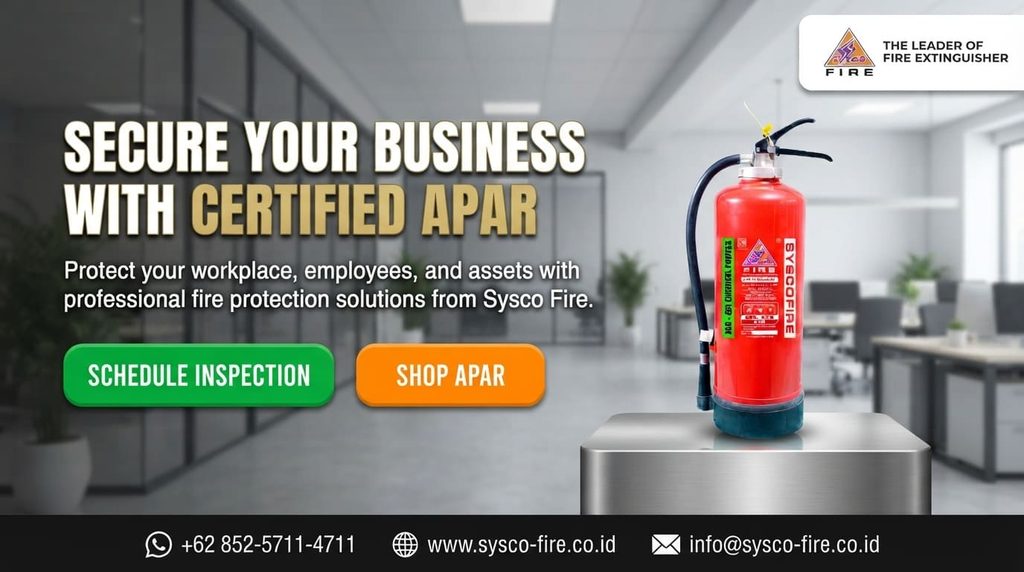
Ensure your business is compliant, safe, and resilient. For comprehensive information on choosing the right fire protection, contact the engineering experts.
- Detailed Information on APAR Manufacturer: For certified fire extinguishing systems and professional guidance, visit Indonesia’s fire protection specialist official website at https://sysco-fire.co.id.
- View Our Full Product Catalog: Explore our range of Dry Chemical Powder, CO2, Foam, and Clean Agent APARs on our dedicated product laman at https://sysco-fire.co.id/apar-alat-pemadam-api-kebakaran.
- Consult Our Specialists Now: Need help determining the right APAR types or quantities for your facility? Contact us via WhatsApp for a direct consultation at +62 852-5711-4711 or click here to redirect directly to our customer service page: https://sysco-fire.co.id/cs.