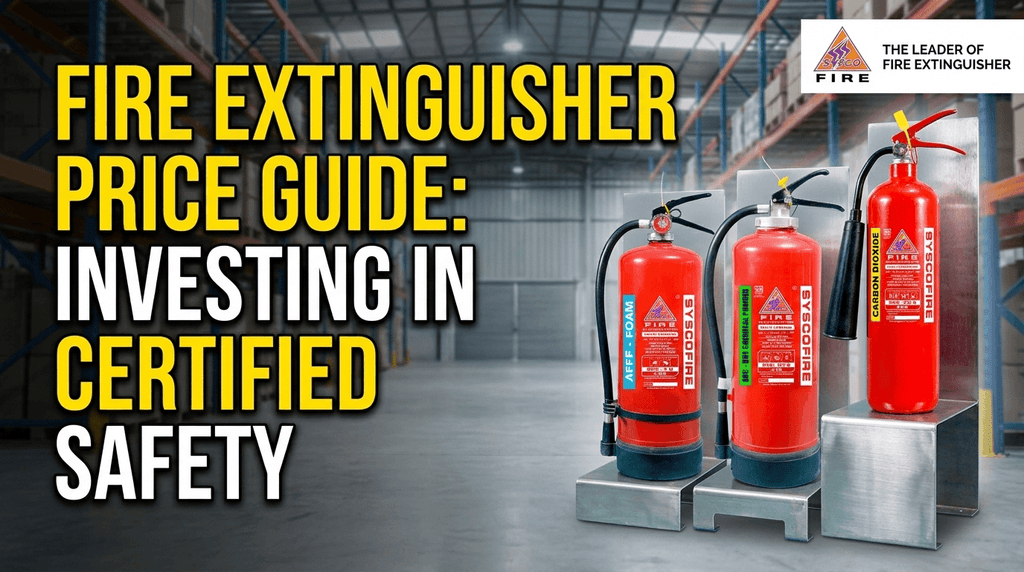
When procurement managers, facility directors, and business owners evaluate fire safety budgets, one question inevitably arises: How much does a certified fire extinguisher actually cost, and what factors determine its price?
In the fire protection industry, comparing prices purely on face value can be misleading. A cheap, uncertified portable fire extinguisher—known in Indonesia as APAR (Alat Pemadam Api Ringan)—might seem like an attractive way to minimize upfront capital expenditure. However, when an emergency strikes, an uncertified or poorly constructed cylinder can fail to discharge, leak pressurized gas over time, or even rupture under pressure.
In active fire suppression, purchasing an extinguisher is not an arbitrary expense; it is a calculated capital investment in business continuity, regulatory compliance, and life safety.
This comprehensive fire extinguisher price guide explores the key cost drivers behind certified APAR units, price expectations by agent type and size, hidden costs of uncertified equipment, and how investing in certified quality from Sysco Fire yields long-term financial security and peace of mind.
Table of Contents
Understanding the Factors That Drive Fire Extinguisher Pricing
The market price of a fire extinguisher is determined by several engineering, material, and regulatory factors. Understanding these elements helps buyers differentiate between high-grade commercial equipment and substandard alternatives.
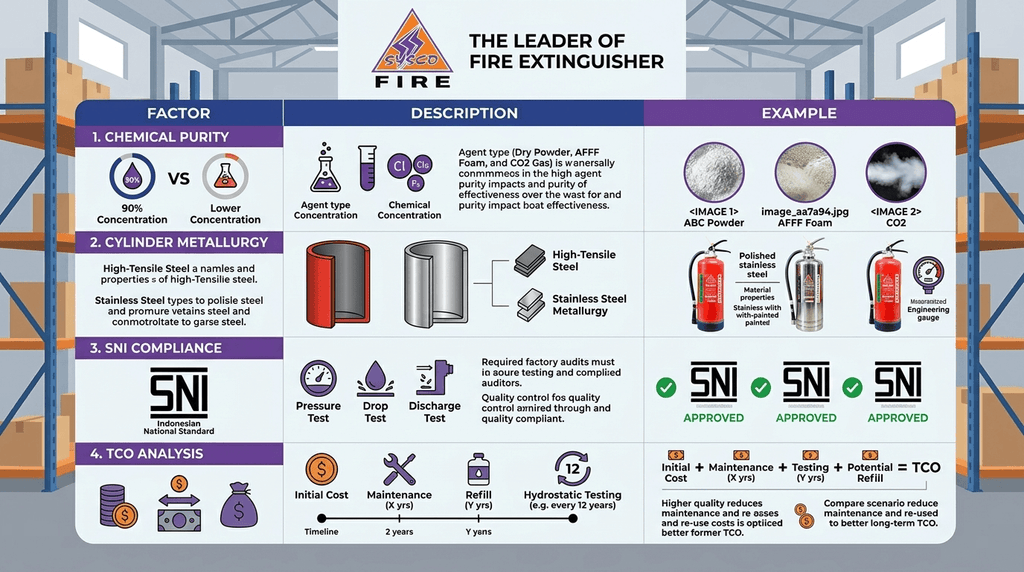
1. Extinguishing Agent Chemical Grade and Purity
The active extinguishing media inside the cylinder accounts for a significant portion of the total unit cost:
- ABC Dry Chemical Powder: Prices vary based on the concentration of Monoammonium Phosphate (e.g., 40%, 70%, or 90% purity). Higher purity formulations offer superior fire knockdown power per kilogram but carry higher raw material costs.
- Carbon Dioxide (CO2): Requires thick-walled, high-pressure seamless steel cylinders capable of safely holding gas under extreme pressure (over 50–60 bar), which increases manufacturing precision and cost.
- AFFF Foam: High-quality Aqueous Film-Forming Foam concentrates utilize fluorochemical surfactants engineered for rapid vapor suppression and blanket stability, driving up chemical production costs.
- Clean Agents: Non-ozone-depleting liquid gas compounds (such as HFC-227ea / HCFC-123 substitutes) are specialized chemical formulations, making them premium-tier fire suppression solutions.
2. Cylinder Manufacturing, Metallurgy, and Pressure Ratings
A certified fire extinguisher cylinder is a specialized pressure vessel. High-quality units feature thick cold-rolled steel, corrosion-resistant internal coatings, heavy-duty brass valve assemblies, stainless steel safety pins, and durable rubber discharge hoses. Lower-cost units frequently compromise on wall thickness, use cheap plastic valves, or lack internal anti-corrosion treatments, leading to premature rust and pressure failure.
3. Official Testing and Certification Compliance
Obtaining official certifications—such as Indonesian National Standards (SNI) and Ministry of Manpower compliance (Permenaker No. 04/1980)—requires rigorous laboratory testing. Certified manufacturers invest heavily in burst pressure testing, discharge duration analysis, fire rating validation, and factory quality audits. This compliance overhead guarantees that the extinguisher will function reliably when lives are on the line.
Estimated Fire Extinguisher Price Benchmarks by Category
While exact pricing varies based on raw material market rates and bulk order quantities, the following guidelines illustrate typical price ranges and market positioning across standard commercial APAR categories:
Portable Units (1 kg to 9 kg)
- 1 kg – 3 kg (Vehicles, Residential, Small Offices):Typically the most affordable entry-level units. Ideal for compact spaces, personal vehicles, and residential kitchens where space is limited and basic Class A, B, or C coverage is required.
- 4 kg – 6 kg (Commercial Offices, Retail, Workshops):The industry standard for commercial building compliance. These mid-sized units offer the optimal balance between discharge duration, agent weight, and ease of handling for untrained staff.
- 9 kg (Industrial Warehouses, Heavy Manufacturing):Heavy-duty portable units engineered for higher fire load risks, offering maximum discharge volume before transitioning to wheeled equipment.
Mobile / Trolley Units (20 kg to 80 kg)
- Wheeled APAR Trolleys:Designed for heavy industrial facilities, fuel depots, airports, and chemical processing plants. These high-capacity units feature heavy-duty steel transport frames and long discharge hoses, representing a higher capital investment tailored for major fire risks.
The Hidden Costs of Cheap, Uncertified Extinguishers
Opting for bargain-basement or uncertified fire extinguishers often creates hidden financial liabilities that far exceed the initial savings:
- Failed K3 and Regulatory Inspections:Under Indonesian workplace safety laws, commercial buildings are subject to routine K3 inspections. Uncertified or non-compliant extinguishers can result in failed audits, mandatory replacement orders, official warnings, or administrative fines.
- Frequent Leakage and Early Replacement:Cheap valve assemblies and inferior seals tend to lose pressure slowly. Once the pressure gauge drops into the red zone, the unit requires immediate refilling or total replacement, doubling your long-term maintenance expenditure.
- Denied Insurance Claims:In the event of a commercial fire, insurance adjusters inspect active fire protection equipment. If investigation reveals that non-compliant or uncertified extinguishers failed to operate, insurance underwriters may deny property damage claims, leaving the business owner entirely liable.
Total Cost of Ownership: Refill, Maintenance, and Lifespan
When budgeting for fire protection, consider the Total Cost of Ownership (TCO) over a 5 to 10-year period:
Total Cost of Ownership = Initial Purchase Price + Routine Inspections + Periodic Refills / Recharging +Hydrostatic Testing
- Routine Refilling: Depending on agent type and local regulations, fire extinguishers require periodic agent replacement or refilling every 1 to 5 years (or immediately after any discharge).
- Hydrostatic Pressure Testing: Cylinders must undergo hydrostatic testing every 5 years to verify structural integrity under pressure.
- Long-Term Value: A certified high-grade cylinder from a reputable manufacturer can be safely hydrotested and refilled multiple times across a 10 to 15-year operational lifespan, delivering a significantly lower cost per year compared to disposable or low-quality units.
Why Buying Direct from Sysco Fire Maximizes Your Investment
As an established manufacturer in fire engineering and active protection, Sysco Fire offers direct-from-factory pricing without sacrificing quality or regulatory compliance:
- Factory-Direct Pricing: By purchasing directly from the manufacturer, commercial clients eliminate intermediary markups, receiving premium certified equipment at highly competitive wholesale rates.
- Uncompromising SNI Certification: Every Sysco Fire cylinder is manufactured to rigorous national standards, complete with official inspection tags, batch tracking, and factory warranties.
- Comprehensive After-Sales Support: Beyond initial procurement, Sysco Fire provides professional refilling services, hydrostatic testing, and technical consultation to keep your facility compliant year after year.
Conclusion
A comprehensive fire extinguisher price guide reveals that true value lies in certified safety, engineering integrity, and long-term reliability. While uncertified extinguishers may offer temporary upfront savings, they expose your business to severe financial liabilities, regulatory penalties, and catastrophic operational risks. Investing in certified APAR units ensures that your property, workforce, and financial assets remain fully protected when seconds count.
Secure your facility with cost-effective, factory-certified fire protection built to perform without fail.
Baca juga : Layanan On-Site & Vendor APAR Jakarta: 11 Solusi Praktis untuk Maintenance APAR Perusahaan.
Explore Our Official Catalog and Connect with Our Experts
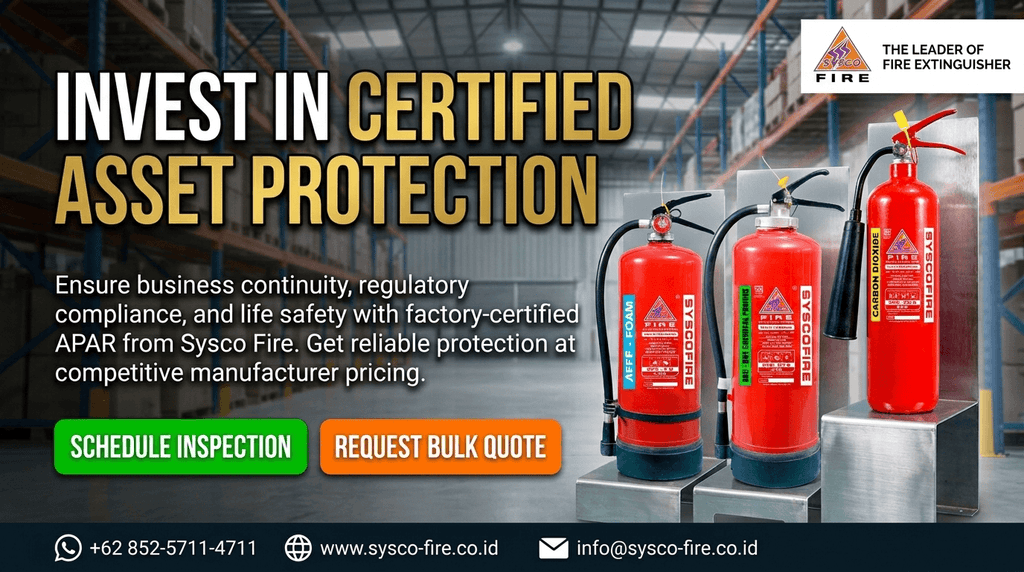
Ready to optimize your facility’s fire safety budget with certified, factory-direct equipment? Explore our complete product lineup and request a customized procurement quote today.
- Visit Our Official Website: Discover our full range of fire engineering solutions, manufacturing credentials, and corporate expertise by visiting https://sysco-fire.co.id.
- Browse Our Full Product Catalog: View detailed specifications, capacities, and pricing options for Dry Chemical Powder, CO2, Foam, and Clean Agent APARs on our official product page at https://sysco-fire.co.id/Promo.
- Speak With Our Sales & Procurement Team: Need a bulk price quotation, facility hazard assessment, or help choosing the right units for your commercial project? Contact our customer support team via WhatsApp at +62 852-5711-4711 or click here to connect directly through our official service desk: https://sysco-fire.co.id/cs.