When a thermal event occurs in a commercial facility, industrial warehouse, or office space, a portable fire extinguisher—known in Indonesia as APAR (Alat Pemadam Api Ringan)—is the primary defense line. Facility managers and safety officers rely on these pressurized units to suppress small localized fires before they destroy infrastructure or threaten human life.
However, a fire extinguisher is a mechanical pressure vessel subject to environmental stress, chemical degradation, and human error. During an active emergency, discovering that an extinguisher will not discharge, leaks pressurized gas, or contains packed chemical powder can lead to severe property damage or loss of life.
Understanding why extinguishers fail and enforcing rigorous preventative maintenance is an essential component of workplace safety engineering and occupational safety (K3) compliance.
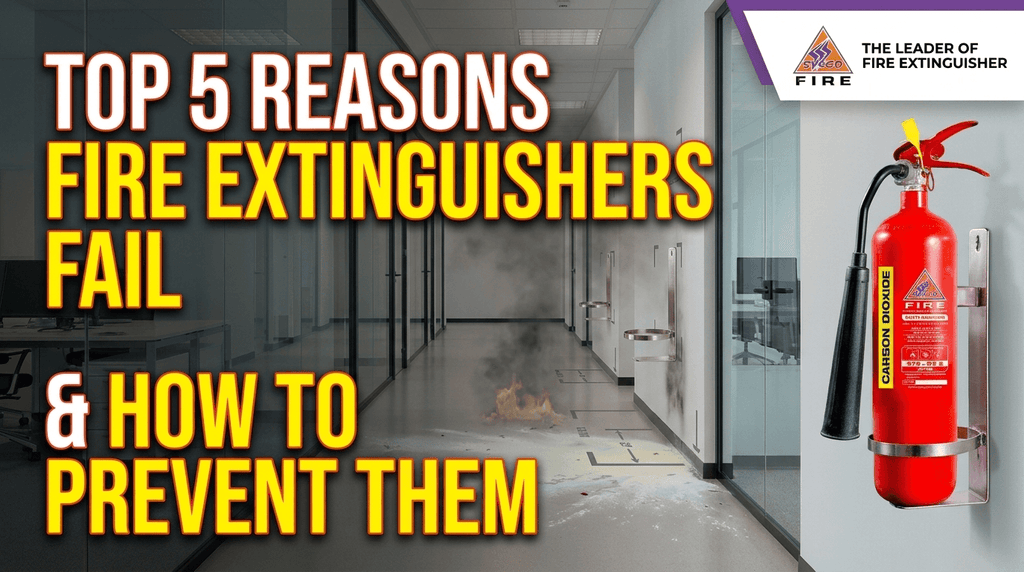
This comprehensive technical guide outlines the top 5 reasons fire extinguishers fail during critical emergencies, actionable steps to prevent each failure mode, and how partnering with Sysco Fire guarantees reliable, factory-certified fire protection.
Table of Contents
1. Depressurization and Slow Pressure Leaks
Why It Happens
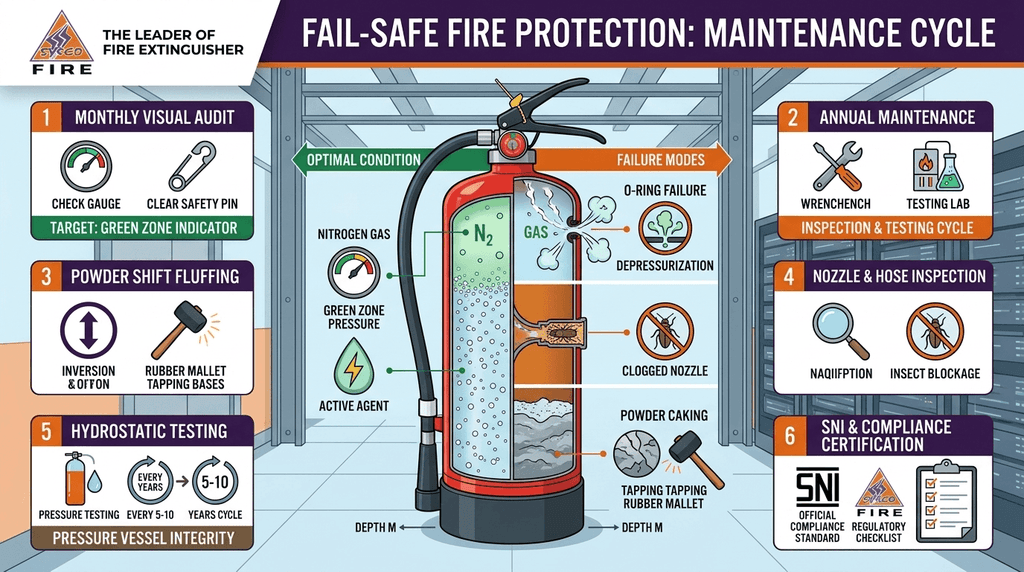
A portable fire extinguisher relies on stored propellant gas (typically dry nitrogen or carbon dioxide) to expel the extinguishing agent through the discharge hose. Over time, micro-cracks in rubber valve O-rings, loose valve stems, thermal expansion, or physical impacts can cause pressure to bleed out gradually. When a user squeezes the operating lever on a depressurized cylinder, nothing comes out.
Technical Failure Indicators
- The pressure gauge indicator needle rests in the Red Zone (Left side / Low Pressure).
- Visible cracks or corrosion around the valve threads and pressure gauge fitting.
- Absence of a factory tamper seal, indicating prior unrecorded discharge or tampering.
How to Prevent It
- Monthly Visual Pressure Checks: Ensure safety wardens inspect every gauge monthly. The needle must point directly inside the central Green Zone.
- Annual Professional Servicing: Schedule certified technician inspections to verify valve seating and pressure integrity.
- Select Quality Brass Valves: Procure APAR units manufactured with heavy-duty forged brass valves rather than cheap, porous plastic assemblies.
2. Chemical Powder Compaction (Caking)
Why It Happens
Dry chemical powder extinguishers (such as ABC Monoammonium Phosphate) are vulnerable to mechanical vibration and ambient moisture. In industrial environments with heavy machinery, high vibration levels, or excessive ambient humidity, the fine chemical powder inside the cylinder gradually settles and compacts into a solid block at the base of the cylinder—a phenomenon known in fire safety engineering as caking.
When an operator discharges a caked unit, the propellant gas escapes through the valve, but the solid mass of powder remains trapped inside, leaving the fire unextinguished.
How to Prevent It
- Periodic Inversion (Fluffing the Powder): During monthly K3 inspections, invert the cylinder (turn it upside down) several times and tap the base lightly with a rubber mallet. You should feel the chemical powder shift freely inside the cylinder.
- Controlled Storage Humidity: Store portable units away from constant water leaks, high steam lines, or direct exposure to tropical rainfall without protective cabinets.
- Hydrostatic Refill Cycles: Replace dry powder chemical media every 2 to 5 years according to manufacturer standards and local regulations.
3. Discharge Hose Blockages and Hose Degradation
Why It Happens
The discharge hose and nozzle direct the fire extinguishing agent toward the base of the flame. Because extinguishers often hang on facility walls for years without use, outdoor weather exposure, UV radiation, and environmental debris can compromise hose integrity.
Insects, mud daubers, and spiders frequently nest inside open discharge nozzles. Additionally, UV exposure causes rubber hoses to dry-rot, crack, or split under discharge pressure, causing the extinguishing agent to spray backward onto the operator instead of reaching the target fire.
How to Prevent It
- Nozzle Obstruction Inspections: Inspect hose nozzles during monthly safety audits to ensure they remain clear of dirt, insects, and debris.
- UV & Weather Protection: Enclose outdoor or marine-installed APARs inside protective fiberglass or powder-coated steel cabinets.
- Immediate Hose Replacement: Replace dry-rotted, cracked, or stiff rubber hoses immediately using certified manufacturer replacement parts.
4. Incorrect Extinguishing Agent Selection for the Fire Class
Why It Happens
Even if an extinguisher operates with full pressure, discharging the wrong agent onto a specific fire class can fail to extinguish the flames or dramatically escalate the hazard:
- Water / AFFF Foam on Class C/E (Electrical) Fires: Conducts electricity back to the operator, causing severe electrical shock.
- CO2 or Water on Class D (Combustible Metals) Fires: Causes explosive reactions when contacting burning magnesium, titanium, or lithium.
- CO2 in Open Outdoor Windy Spaces: Rapidly dissipates into ambient air before smothering the fire base.
How to Prevent It
- Conduct Facility Hazard Assessments: Match extinguishing agents precisely to local risk zones (e.g., CO2 or Clean Agent for server rooms; ABC Powder for general industrial zones; AFFF Foam for fuel storage).
- Clear Classification Labeling: Ensure every installed unit features prominent fire class identification symbols (Class A, B, C, D, or E).
- Comprehensive K3 Employee Training: Train staff to identify fire classes before attempting suppression.
5. Human Error, Panic, and Lack of Operator Training
Why It Happens
During a real fire emergency, adrenaline and panic frequently cause untrained personnel to misuse functioning fire safety equipment:
- Failing to Pull the Safety Pin: Squeezing the handle forcefully while the yellow pin and tamper seal remain locked, breaking the handle mechanism.
- Aiming at the Flame Tops: Discharging the agent into upper flames instead of sweeping across the fuel base.
- Discharging Beyond Effective Range: Standing too far away (beyond 2–3 meters), causing the agent stream to dissipate before contacting the fire.
How to Prevent It
- Enforce the PASS Method: Train all employees on the universal PASS technique:
- Pull the safety pin.
- Aim low at the base of the fire.
- Squeeze the operating lever.
- Sweep slowly from side to side.
- Routine Fire Drills: Conduct regular live discharge training and evacuation simulations for facility safety wardens.
Summary Failure Prevention Checklist
| Failure Mode | Primary Root Cause | Prevention Action Standard |
| Depressurization | Valve seal leaks, physical impact | Monthly gauge checks (Green Zone target) |
| Powder Caking | Vibration, humidity, settling | Periodic cylinder inversion & tapping |
| Hose Blockages | Insects, UV degradation, dry-rot | Clear nozzle checks, protective cabinets |
| Agent Mismatch | Incorrect unit selection for fire risk | Hazard assessment & visible class labeling |
| Operator Error | Panic, lack of emergency training | Regular PASS method training & drills |
Why Choose Sysco Fire for Fail-Safe Protection
Preventing extinguisher failures requires high-quality engineering, certified manufacturing standards, and rigorous quality control. Sysco Fire builds reliability into every cylinder:
- SNI & Permenaker Certified Manufacturing: Every Sysco Fire cylinder undergoes rigorous factory pressure testing, burst audits, and discharge validation to meet Indonesian National Standards (SNI).
- Heavy-Duty Component Engineering: Constructed with high-tensile steel bodies, anti-corrosion internal linings, forged brass valves, and high-grade UV-resistant discharge hoses.
- Factory Refill & Maintenance Services: Sysco Fire offers professional refilling, hydrostatic testing, and K3 maintenance support to keep your building’s fire safety network operating without fail.
Conclusion
Understanding the top reasons fire extinguishers fail in emergencies empowers facility managers to eliminate hazards before a crisis occurs. By enforcing monthly visual inspections, maintaining correct environmental shielding, conducting employee training, and investing in certified equipment from Sysco Fire, business owners ensure that their fire safety assets perform flawlessly when seconds count.
Protect your workforce, maintain regulatory compliance, and eliminate equipment failure risks.
Baca juga : Layanan On-Site & Vendor APAR Jakarta: 11 Solusi Praktis untuk Maintenance APAR Perusahaan.
Explore Our Official Catalog and Connect with Our Experts
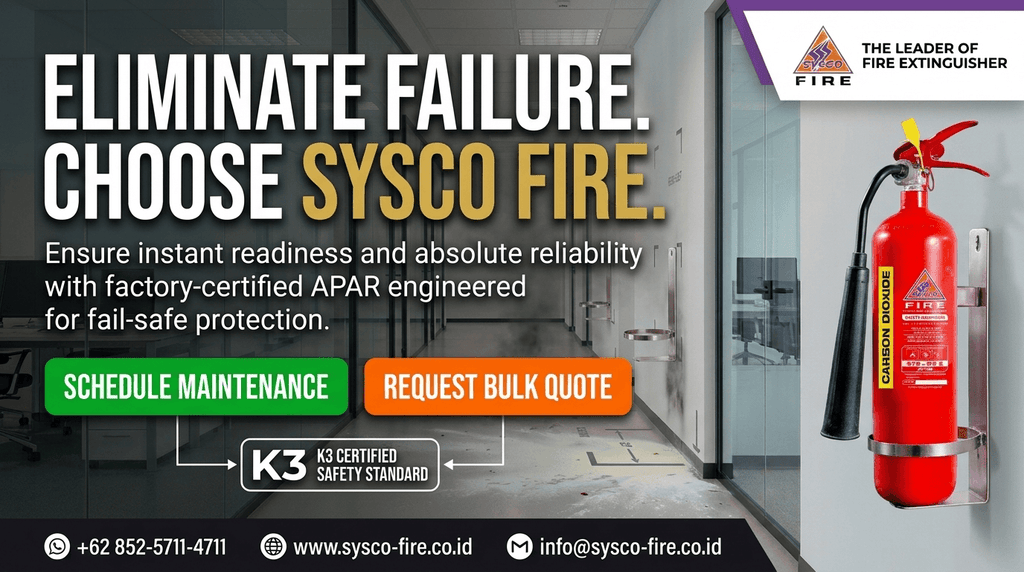
Ready to upgrade your facility’s safety equipment with certified, factory-direct fire extinguishers? Explore our product line and speak with our technical team today.
- Visit Our Official Website: Discover our full range of fire protection standards, manufacturing credentials, and technical resources at https://sysco-fire.co.id.
- Browse Our Full Product Catalog: View technical specifications, capacities, and agent types for Dry Chemical Powder, CO2, Foam, and Clean Agent APARs on our official product page at https://sysco-fire.co.id/Promo.
- Speak With Our Safety Consultants: Need professional refilling services, facility audits, or wholesale procurement quotes? Contact our customer support team via WhatsApp at +62 852-5711-4711 or click here to connect directly through our official service desk: https://sysco-fire.co.id/cs.