In the fast-paced world of logistics, transportation, and commercial operations, vehicles are the beating heart of business continuity. Whether traversing bustling metropolitan distribution corridors across Java or navigating remote industrial supply routes, commercial fleets—ranging from heavy cargo trucks and delivery vans to passenger buses and corporate transport cars—face a constant, hidden peril: vehicular fire hazards.
Utilizing certified Portable Fire Extinguishers Vehicles represent the single most critical on-board safety asset for commercial fleets traversing busy logistics routes or navigating industrial environments. In the modern transportation landscape, vehicle-based fire hazards can arise without warning, threatening drivers, high-value cargo, and business continuity.
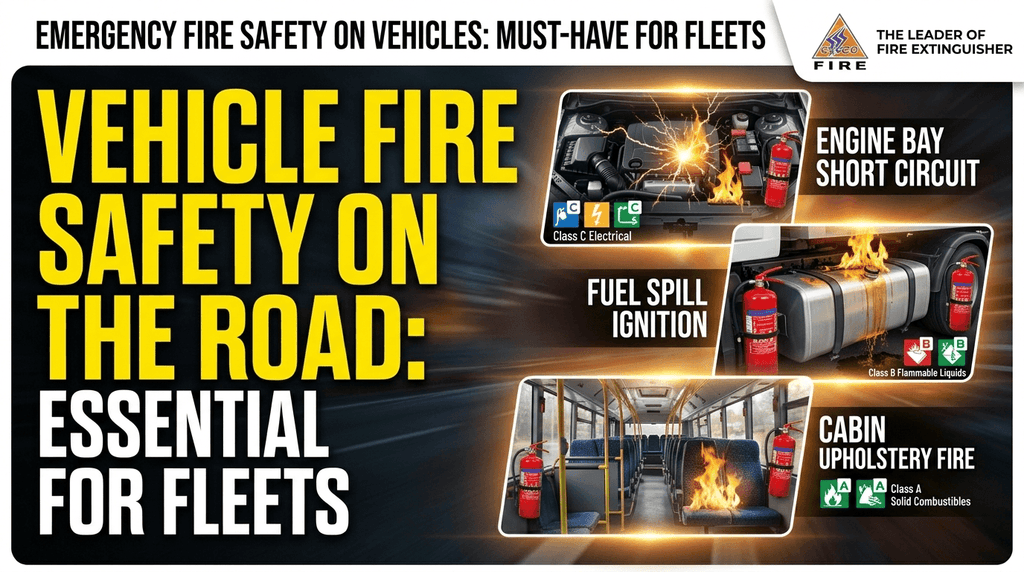
Engine compartments operate under immense thermal stress, housing high-voltage electrical wiring, pressurized fuel lines, hydraulic systems, and friction-generating mechanical parts. When a short circuit occurs, a fuel line ruptures, or an overheated brake system ignites leaking fluids, a vehicular fire can escalate from a wisp of smoke into an inferno in a matter of seconds.
In mobile environments, waiting for municipal emergency services is rarely an option; the driver and on-board personnel represent the first and only immediate line of defense. Equipping every commercial vehicle with a certified, reliable Portable Fire Extinguisher for Vehicles is not merely a sensible precaution—it is an absolute operational necessity and a vital component of workplace safety under Indonesian K3 (Occupational Health and Safety) standards.
This comprehensive guide explores the unique fire risks associated with mobile fleets, examines the ideal extinguisher specifications for transport vehicles, highlights regulatory frameworks, and explains why specifying certified safety hardware from Sysco Fire guarantees absolute protection on the road.
Table of Contents
Understanding Vehicular Fire Risks: Why Fleet Vehicles Catch Fire
Vehicular fires are complex incidents involving multiple classes of fire hazards occurring simultaneously within a confined, vibrating space:
1. Class B Fires: Flammable Liquids and Fluids
- Fuel Sources: Gasoline, diesel fuel, engine oil, transmission fluid, brake fluid, and power steering fluid.
- The Risk: During a mechanical failure or collision, pressurized fluids can spray onto hot exhaust manifolds or turbochargers, instantly flashing into an intense liquid fire that spreads rapidly along the chassis.
2. Class C Fires: Energized Electrical Systems
- Fuel Sources: Battery banks, alternator wiring, engine control units (ECUs), dashboard circuitry, and auxiliary power units.
- The Risk: Electrical insulation can chafe, fray, or short-circuit due to constant vehicular vibrations and exposure to weather extremes. These faults generate intense localized heat, igniting wire casing and surrounding plastic components.
3. Class A Fires: Ordinary Combustibles
- Fuel Sources: Rubber tires, plastic upholstery, foam seat padding, paper manifests, and cargo materials inside the cabin or trailer.
Key Requirements for an Effective Vehicle Fire Extinguisher
Selecting a portable fire extinguisher for transport and commercial fleets requires looking beyond standard office-grade units. Vehicle extinguishers must be engineered to withstand rigorous mobile operating conditions.
1. Multi-Purpose ABC Rating
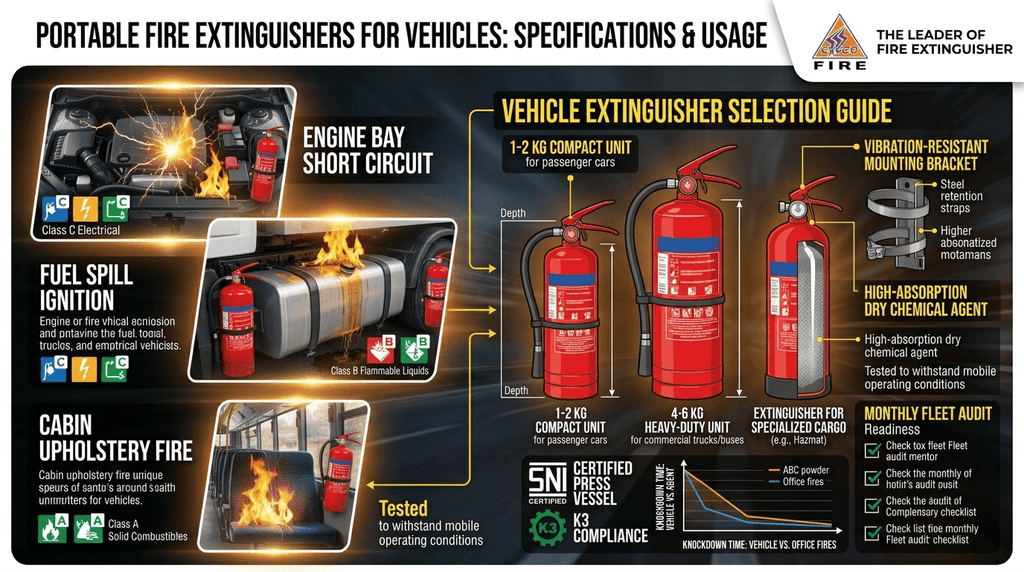
Because vehicular fires combine flammable liquids (Class B) and electrical faults (Class C) alongside cabin materials (Class A), fleet extinguishers must carry a multi-purpose ABC rating. Monoammonium phosphate-based dry chemical powder units provide the rapid knockdown speed and universal coverage required to suppress these combined risks instantly.
2. High Vibration Resistance and Robust Mounting
A vehicle extinguisher spends its entire operational life subjected to constant road shocks, engine vibrations, and temperature fluctuations. Inferior brackets can cause the cylinder to shake loose during transit or fail when needed. Sysco Fire’s vehicle-grade extinguishers feature heavy-duty steel mounting brackets and secure retention straps designed to keep the unit firmly anchored within the driver’s reach—whether mounted under the passenger seat, inside the cab footwell, or within an exterior protective housing.
3. Compact Ergonomics for Rapid Deployment
In a roadside emergency, every second counts. Vehicle extinguishers must be compact and lightweight (typically 1 kg to 2 kg for passenger transport, and 3 kg to 6 kg for heavy trucks) so that drivers can unclip and deploy them with one hand under stressful, high-panic conditions.
Fleet Safety Applications Across Diverse Transport Sectors
Different commercial sectors face distinct risk profiles that dictate their onboard fire safety strategies:
- Logistics and Freight Trucking: Heavy cargo carriers hauling goods across long distances face extreme engine bay heat loads and brake drag risks. Equipping trucks with robust 4 kg to 6 kg ABC powder units ensures drivers can tackle major mechanical or fuel-fed fires independently.
- Public Buses and Passenger Transport: Passenger safety is paramount in mass transit. Permenaker guidelines and transportation safety audits mandate easily accessible, certified extinguishers inside passenger cabins and driver compartments to manage electrical or upholstery incidents swiftly.
- Last-Mile Delivery Vans: Vans operating in congested urban stop-and-go traffic experience frequent engine thermal cycles. Compact 2 kg units fit neatly into compact cabins without sacrificing legroom while providing immediate first-response capability.
- Mining and Heavy Construction Fleets: Off-road dump trucks and heavy machinery operate in remote environments surrounded by combustible dust, hydraulic fluid lines, and extreme engine loads, requiring heavy-duty, vibration-damped dry chemical systems.
Maintenance and K3 Compliance for Fleet Operators
Installing a fire extinguisher inside a vehicle is only effective if the equipment remains fully operational when an emergency strikes. Fleet managers must integrate fire safety into regular maintenance schedules:
- Monthly Visual Inspections: During routine vehicle pre-trip inspections, drivers or fleet mechanics must verify that the pressure gauge needle sits firmly in the green operating zone, the safety pin is intact, and the cylinder is free from physical dents or heavy road grime.
- Combating Powder Compaction: Due to constant vehicle vibrations, dry chemical powder inside mobile extinguishers can settle and pack down over time. Periodic inspection and gentle handling help maintain agent fluidity.
- Annual Servicing and Certification: Ensure that all fleet extinguishers undergo annual recertification by qualified technicians to comply with Indonesian K3 and transportation safety standards.
Why Choose Sysco Fire for Commercial Fleet Protection
When outfitting an entire commercial fleet with life-safety equipment, product reliability, manufacturing precision, and regulatory compliance are non-negotiable. Sysco Fire stands as an industry leader, delivering uncompromising safety solutions tailored to industrial and transport demands:
- Official SNI & K3 Compliance: Every Sysco Fire portable extinguisher is manufactured strictly in accordance with Indonesian National Standards (SNI) and Ministry of Manpower regulations, ensuring effortless compliance during vehicle safety audits and transportation inspections.
- Rugged Construction: Built using high-tensile steel cylinders, corrosion-resistant exterior powder coatings, and heavy-duty brass valves, Sysco Fire units are engineered to endure the harshest road and weather conditions.
- Comprehensive Support and Sizing: From compact 1 kg units for passenger cars to heavy-duty 6 kg units for commercial cargo trucks, Sysco Fire provides complete sales, expert consultations, and reliable maintenance support.
Conclusion
Equipping transport vehicles and commercial fleets with portable fire extinguishers is a critical line of defense against sudden engine fires, fuel leaks, and electrical short circuits on the road. By investing in multi-purpose, vibration-resistant ABC powder units, fleet operators protect their drivers, safeguard expensive capital assets, and maintain seamless business continuity. Partner with Sysco Fire to equip your entire fleet with certified, high-performance protection that meets rigorous K3 standards.
Secure your mobile assets and protect your drivers on every journey today.
Baca juga : Jangan Tunggu Insiden Terjadi! 11 Checklist Evaluasi HSE Tahunan yang Wajib Diperiksa.
Explore Our Official Catalog and Connect with Our Experts
Ready to upgrade your commercial fleet’s fire safety equipment with factory-certified portable extinguishers and professional support? Explore our manufacturing lineup and speak with our technical team today.
- Visit Our Official Website: Discover our corporate credentials, engineering standards, and complete vehicular fire protection solutions at https://sysco-fire.co.id.
- Browse Our Full Product Catalog: View detailed specifications, capacities, and agent types for Dry Chemical Powder, CO2, Foam, and Clean Agent APARs on our official product page at https://sysco-fire.co.id/Promo.
- Speak With Our Safety Consultants: Need professional fleet safety audits, bulk procurement quotes, or vehicle mounting guidance? Contact our customer support team via WhatsApp at +62 852-5711-4711 or click here to connect directly through our official service desk: https://sysco-fire.co.id/cs.