
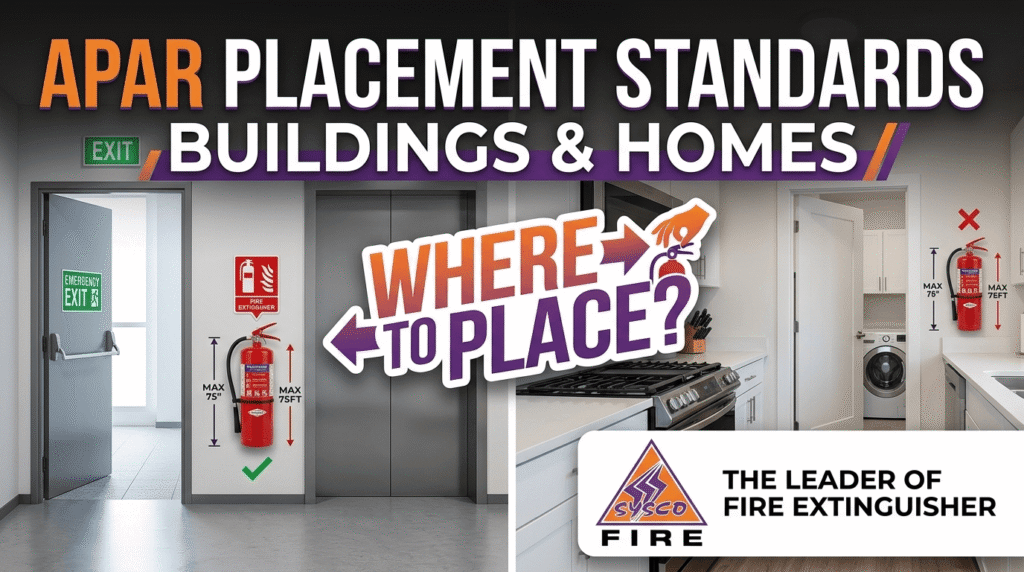
When a fire breaks out, every single second counts. The difference between a minor incident and a catastrophic disaster often comes down to one crucial factor: how quickly you can access a fire extinguisher. Many property owners invest in high-quality fire protection equipment, but they make a critical, potentially fatal mistake—they place the extinguishers in the wrong locations.
Having a fire extinguisher (often referred to as APAR or Alat Pemadam Api Ringan in Indonesia) is only half the battle. The other half is ensuring it is positioned correctly according to recognized safety standards. Proper placement ensures that anyone, even in a state of panic, can quickly locate, access, and operate the device safely.
In this comprehensive guide, we will explore the standard positioning and placement of fire extinguishers in both commercial buildings and residential homes, adhering to international safety guidelines such as the NFPA (National Fire Protection Association) and local fire safety codes.
Table of Contents
Why Fire Extinguisher Placement is a Matter of Life and Death
In emergency situations, human behavior is highly unpredictable. Cognitive functions decline, and panic sets in. If a fire extinguisher is hidden behind a door, tucked away in a closed cabinet, or placed too close to a potential fire hazard, it becomes completely useless.
Fire safety experts emphasize that the primary goal of extinguisher placement is unobstructed accessibility. A strategically placed extinguisher allows an individual to grab the device, evaluate the fire, and create a safe escape route if the fire becomes uncontrollable. If the placement requires a person to walk toward the fire to get the extinguisher, the placement is fundamentally flawed.
General Principles of Fire Extinguisher Positioning
Regardless of whether you are securing a multi-story office building or a single-family home, several universal rules apply to fire extinguisher placement. These rules are grounded in ergonomics, visibility, and rapid response:
1. The Right Height Requirements
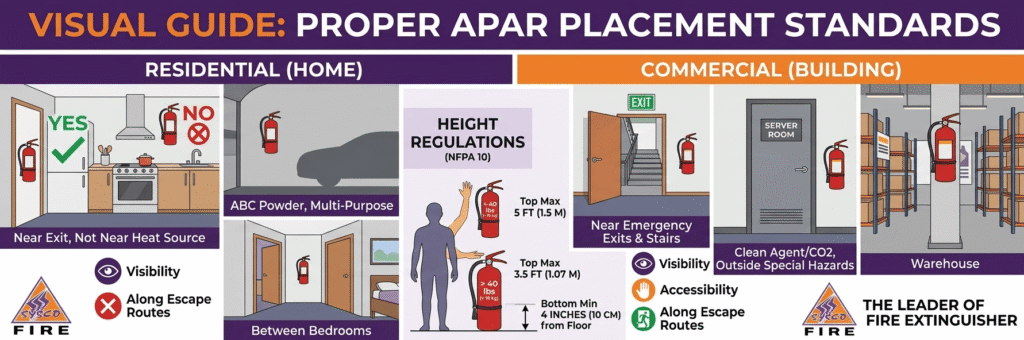
Fire extinguishers should never simply be left sitting on the floor. They must be mounted on brackets or placed in designated wall cabinets. According to general fire safety standards (like NFPA 10):
- For extinguishers weighing under 40 lbs (approx. 18 kg): The top of the extinguisher should be no higher than 5 feet (1.5 meters) from the floor.
- For heavier extinguishers weighing over 40 lbs: The top should be no higher than 3.5 feet (1.07 meters) from the floor.
- Bottom Clearance: Regardless of weight, the bottom of the extinguisher must always be at least 4 inches (10 cm) above the floor to prevent accidental damage, corrosion, or interference during floor cleaning.
2. High Visibility and Signage
An extinguisher cannot save lives if no one knows it is there. They should be installed in highly visible areas, painted in standard safety red. In commercial settings, the placement should be accompanied by clear, photoluminescent (glow-in-the-dark) signage positioned high above the extinguisher, ensuring it can be seen even if the room fills with smoke or the power goes out.
3. Immediate Accessibility
Extinguishers must be located along normal paths of travel, particularly near exits. In the event of a fire, an individual should naturally move toward an exit. By placing the extinguisher near the door, the user can grab it while keeping their back to a safe escape route. Never place an extinguisher in a dead-end hallway.
Fire Extinguisher Placement Standards for Commercial Buildings
Commercial buildings, factories, and offices present unique challenges due to their size, the number of occupants, and the variety of fire hazards present. The placement in these environments is strictly dictated by the “Class” of fire hazard and the “Travel Distance.”
Travel Distance Rules
Travel distance refers to the actual walking distance from any point in the building to the nearest fire extinguisher. It is not a straight-line radius, as it must account for walls, partitions, and furniture.
- Class A Hazards (Ordinary combustibles like wood, paper, cloth): The maximum travel distance to a Class A extinguisher should not exceed 75 feet (approx. 22.8 meters).
- Class B Hazards (Flammable liquids like oil, gasoline, paint): Because liquid fires spread much faster, the travel distance is shorter. Class B extinguishers should be located within 30 to 50 feet (9 to 15 meters) of the hazard, depending on the extinguisher’s rating.
- Class C Hazards (Electrical equipment): The placement for Class C extinguishers usually follows the rules of the surrounding Class A or B hazards, but they must be located close to high-risk areas like server rooms or electrical panels.
- Class K Hazards (Commercial cooking oils and fats): Wet chemical fire extinguishers must be placed within 30 feet (9 meters) of commercial fryers and cooking appliances.
Key Locations in Commercial Spaces
- Hallways and Corridors: Extinguishers should be evenly distributed along main corridors, specifically near stairwells and exit doors.
- Server Rooms & Electrical Closets: Equip these areas with CO2 (Carbon Dioxide) or Clean Agent extinguishers to prevent damage to sensitive equipment. Place the extinguisher just outside the door so the user doesn’t have to enter a smoke-filled room unarmed.
- Warehouses: Placement must be marked clearly on high pillars, ensuring they are visible above stacked pallets and machinery.
Fire Extinguisher Placement Guidelines for Homes
While residential homes are generally not subject to the same strict legal inspections as commercial buildings, applying professional standards to your home is the best way to protect your family. A good rule of thumb is to have at least one fire extinguisher on every level of the home.
The Kitchen
The majority of house fires start in the kitchen. However, do not place the fire extinguisher directly next to or above the stove. If a grease fire erupts, you will not be able to reach the extinguisher without burning yourself. Instead, mount the extinguisher near the kitchen entrance/exit. This allows you to step back from the flames, grab the extinguisher, and maintain a clear path to escape if the fire cannot be put out.
The Garage and Workshop
Garages are full of flammable liquids, oils, paints, and electrical tools. A Dry Chemical (ABC) powder extinguisher is ideal here. Mount it on the wall near the garage door leading outside, or near the door leading into the house.
Bedrooms and Hallways
Fires often break out at night due to electrical faults or space heaters. Placing an extinguisher in the central hallway of the bedroom wing ensures that anyone waking up to a smoke alarm can quickly access it. For larger homes, keeping a small, portable extinguisher directly in the master bedroom is highly recommended for immediate personal defense.
The Laundry Room
Lint buildup in dryers is a notorious fire hazard. Mount a small ABC extinguisher on the wall near the door of the laundry room to quickly suppress any sudden appliance fires.
Common Mistakes in Fire Extinguisher Placement
Even with the best intentions, property owners frequently make critical errors when positioning their fire safety equipment. Avoid these common pitfalls:
- Hiding Them for Aesthetics: Fire extinguishers are not meant to blend in with your interior design. Hiding them behind curtains, inside unmarked cabinets, or under desks delays reaction time. If they must be in a cabinet, the cabinet must have a clear glass window and bold red lettering.
- Proximity to the Hazard: As mentioned with the kitchen stove, placing an extinguisher too close to a high-risk area means the fire itself will block access to the extinguisher. Always maintain a safe buffer zone.
- Ignoring Temperature Fluctuations: Placing extinguishers outside without protective covers, or right next to industrial radiators, can damage the cylinder or cause the extinguishing agent to degrade.
- Blocking the Path: In commercial settings, it is common to see boxes, chairs, or trash cans pushed in front of an extinguisher. The area directly beneath and in front of a fire extinguisher must remain entirely clear at all times.
Regular Maintenance: The Companion to Proper Placement
Proper positioning is pointless if the fire extinguisher is expired, depressurized, or broken. Monthly visual inspections are a must. Check the pressure gauge to ensure the needle is in the green zone. Ensure the safety pin is intact and the nozzle is free of debris (insects often build nests in open nozzles). Furthermore, engage professional services for annual maintenance and hydrostatic testing to guarantee that your extinguishers will perform flawlessly when you need them most.
Conclusion
Understanding the standard position and placement of fire extinguishers in buildings and homes is a fundamental aspect of fire safety management. By following distance guidelines, mounting them at the correct height, and placing them along natural escape routes, you empower occupants to act swiftly and decisively during a fire emergency. Remember, a fire extinguisher is your first line of defense; respect its role by giving it a visible, accessible, and strategic home on your walls. Don’t wait until an emergency happens to realize your safety equipment is out of reach.
Baca juga : Prosedur Evakuasi Darurat: 11 Langkah Wajib agar Tetap Aman Saat Keadaan Krisis
Take the Next Step in Fire Safety with Sysco-Fire
Protecting your assets and loved ones requires top-tier equipment and expert guidance. For the highest quality fire protection solutions, consult with the experts.
- Visit our official website for comprehensive safety solutions at https://sysco-fire.co.id.
- Browse our full range of certified fire safety equipment and find the perfect APAR for your needs on our Detailed Product Page.
- Need a consultation, installation advice, or a product quote? Contact us via WhatsApp at +62852-5711-4711 today for fast, professional assistance!