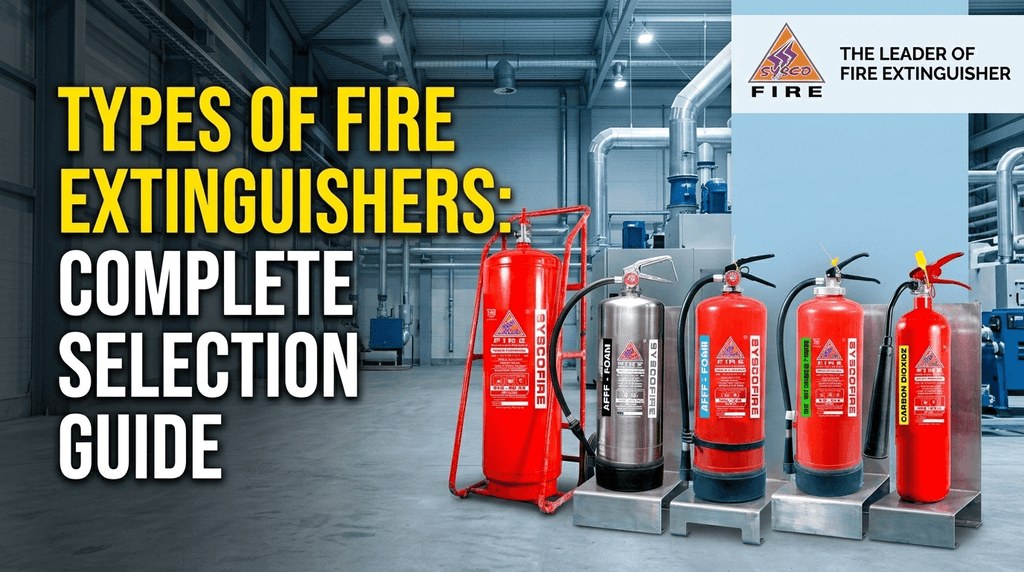
Fire protection is not a one-size-fits-all discipline. A manufacturing plant handling volatile chemical solvents faces fundamentally different fire hazards than a data center housing millions of dollars in sensitive server infrastructure or a commercial kitchen operating deep fryers at high temperatures. Using the wrong fire extinguishing agent on a specific hazard can be ineffective, cause catastrophic secondary property damage, or even result in fatal injuries to the operator.
In active fire suppression, portable fire extinguishers—known in Indonesia as APAR (Alat Pemadam Api Ringan)—are engineered with specialized extinguishing agents tailored to specific fire classifications.
This comprehensive guide breaks down the primary types of fire extinguishers, their underlying chemical mechanics, their ideal applications across commercial and industrial sectors, and how facility managers can select the perfect fire safety layout to ensure complete regulatory compliance and operational resilience.
Understanding Fire Classifications: The Foundation of Selection
Before selecting an extinguisher type, facility managers must understand how fires are classified based on their fuel source. Indonesian safety standards (Permenaker No. 04/1980) and international fire codes categorize fires into distinct classes:
- Class A (Ordinary Combustibles): Fires involving solid organic materials such as wood, paper, cloth, rubber, trash, and many plastics.
- Class B (Flammable Liquids): Fires involving liquids or liquefiable solids such as gasoline, diesel, oil, paint, thinners, solvents, and alcohol.
- Class C (Flammable Gases): Fires fueled by gases like methane, propane, butane, and natural gas.
- Class E / Electrical Hazards: Fires involving live electrical equipment, switchboards, transformers, appliances, and wiring. (Note: Non-conductive agents are strictly required).
- Class F / K (Cooking Oils & Fats): High-temperature fires involving commercial cooking fats and oils in kitchens and food processing facilities.
Major Types of Fire Extinguishers & Their Applications
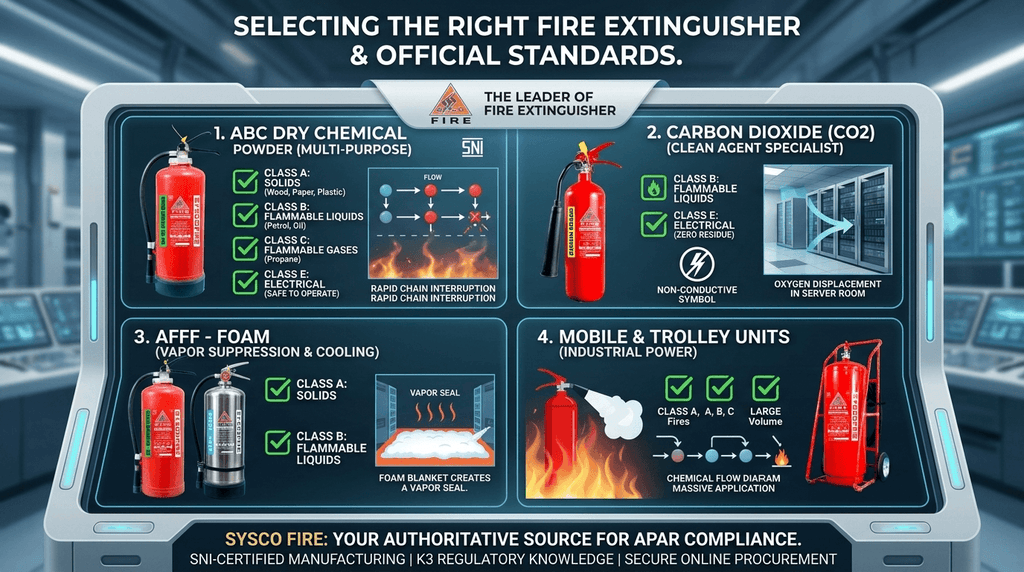
Each type of APAR contains a distinct suppression agent designed to neutralize one or more fire classes. Here is a detailed breakdown of the four core types manufactured for commercial and industrial protection:
1. ABC Dry Chemical Powder Fire Extinguishers
- Primary Agents: Monoammonium Phosphate and Ammonium Sulfate.
- Effective Fire Classes: Class A, Class B, Class C, and Class E (Electrical).
How It Works:
ABC Dry Chemical Powder is the most widely deployed multi-purpose fire suppression agent in the world. When discharged, the fine chemical powder coats the burning fuel, creating a physical barrier that smothers the flame and interrupts the chemical chain reaction of combustion. Because the powder is non-conductive, it is safe for use on live electrical equipment.
Best Applications:
General commercial offices, warehouses, retail centers, logistics hubs, residential buildings, and manufacturing plants with mixed solid and liquid hazards.
Key Consideration:
While highly effective and versatile, dry chemical powder leaves a fine chemical residue after discharge. This residue can be abrasive and messy, making it less ideal for cleanroom environments or delicate electronic hardware.
2. Carbon Dioxide (CO2) Fire Extinguishers
- Primary Agent: Pure pressurized Carbon Dioxide Gas (CO2).
- Effective Fire Classes: Class B (Flammable Liquids) and Class E / Electrical Hazards.
How It Works:
CO2 extinguishers discharge a cold gas cloud that rapidly displaces atmospheric oxygen around the fire, starving the combustion process. Simultaneously, the extreme cold of the discharging gas provides a localized cooling effect on hot components.
Best Applications:
Server rooms, data centers, electrical switchgear rooms, telecommunications hubs, laboratories, control rooms, and hospital diagnostic suites.
Key Consideration:
CO2 is a clean agent—it leaves zero chemical residue upon discharge, ensuring sensitive microelectronics suffer no secondary damage. However, CO2 has limited effectiveness on Class A solid combustible fires because it lacks a lasting cooling effect on deep-seated embers.
3. AFFF Foam Fire Extinguishers
- Primary Agent: Aqueous Film-Forming Foam (AFFF) solution mixed with water.
- Effective Fire Classes: Class A (Solid Combustibles) and Class B (Flammable Liquids).
How It Works:
AFFF Foam expands upon discharge to form a thick, cohesive blanket over liquid fuel spills. This blanket excludes oxygen, cools the liquid, and seals in volatile flammable vapors to prevent reignition (reflash). A thin aqueous film spreads rapidly beneath the foam blanket to accelerate vapor containment.
Best Applications:
Petrochemical facilities, fuel depots, gas stations (SPBU), chemical storage warehouses, automotive workshops, paint spray booths, and marine vessel engine rooms.
Safety Warning:
Because AFFF foam contains water, standard foam extinguishers are electrically conductive. They must never be discharged onto live electrical equipment.
4. Clean Agent (Liquid Gas) Fire Extinguishers
- Primary Agents: Environmentally safe halocarbon compounds (such as HFC-227ea / HCFC-123 substitutes).
- Effective Fire Classes: Class A, Class B, and Class E (Electrical).
How It Works:
Clean Agent units discharge a non-conductive, fast-evaporating gas that extinguishes fire primarily by heat absorption and interrupting the chemical combustion chain.
Best Applications:
High-value asset protection, server vaults, archives, aviation control towers, medical operating theaters, and precision engineering labs.
Key Consideration:
Clean agents combine the residue-free benefits of CO2 with the multi-class versatility of powder, offering premium protection for sensitive assets without ozone depletion hazards.
Commercial & Industrial Selection Matrix
To help facility managers select the appropriate units, the following summary matrix maps extinguisher types to specific operational environments:
| Facility Type | Primary Hazards | Recommended APAR Types |
| Corporate Offices & Retail | Paper, furniture, computers | ABC Dry Powder, CO2 |
| Data Centers & Server Rooms | Sensitive electronics, wiring | CO2, Clean Agent |
| Chemical Plants & Fuel Storage | Gasoline, solvents, oils | AFFF Foam, ABC Dry Powder |
| Commercial Kitchens & Bakeries | High-temp cooking oils | Wet Chemical / Class K, CO2 |
| Heavy Manufacturing & Mills | Machinery, fuels, solids | Heavy-duty ABC Powder, Trolley Units |
Key Regulatory Factors for Facility Compliance
Selecting the right type of fire extinguisher is only the first step. To comply with Indonesian Ministry of Manpower regulations (Permenaker No. 04/1980) and pass official K3 inspections, facility owners must adhere to strict installation guidelines:
- Placement Spacing: Portable extinguishers must be placed along exit pathways, with a maximum travel distance of 15 meters between units.
- Mounting Height: Extinguishers must be mounted on wall brackets or inside cabinets, positioned between 1.2 meters to 1.25 meters above the finished floor level to prevent cylinder corrosion and ensure rapid access.
- Clear Signage: Every extinguisher location must feature high-visibility APAR signage posted directly above the unit.
- Inspection Schedule: All units require visual checks every month and full technical maintenance/recharging every 12 to 24 months, depending on the agent type.
Conclusion
Understanding the distinct types of fire extinguishers and matching them to your facility’s specific fuel risks is a critical responsibility for facility managers, safety officers, and business owners. Whether you need the versatile multi-purpose coverage of ABC Dry Powder, the zero-residue precision of CO2, or the heavy-duty vapor suppression of AFFF Foam, choosing high-performance, certified equipment ensures that your property and workforce remain protected against unexpected fire emergencies.
Invest in engineered safety. Choose certified fire protection built to official national standards.
Baca juga: Dari Sertifikasi hingga Garansi: 11 Tips Memilih Penjual APAR di Sidoarjo.
Explore Our Official Catalog and Connect with Our Experts
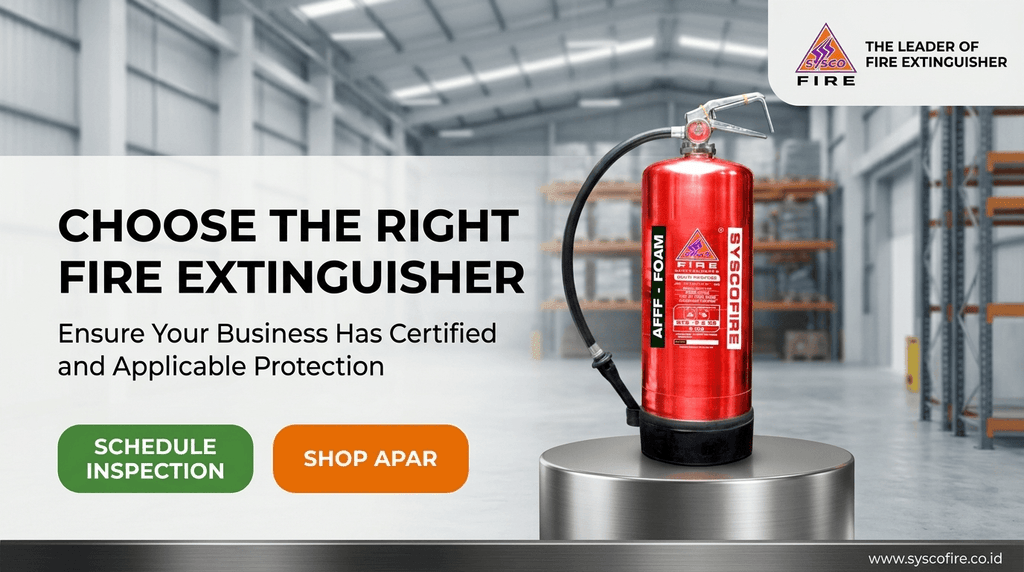
Ready to equip your commercial or industrial facility with certified, high-performance fire extinguishers? Explore our complete manufacturing portfolio and speak with our fire safety specialists today.
- Visit Our Official Website: Learn more about our manufacturing standards, engineering capabilities, and corporate fire protection solutions at https://sysco-fire.co.id.
- Browse Our Full Product Catalog: View detailed specifications, capacities, and certifications for Dry Chemical Powder, CO2, Foam, and Clean Agent APARs on our official product page at https://sysco-fire.co.id/Promo.
- Speak With Our Technical Team: Need assistance conducting a hazard assessment or planning a bulk procurement for your facility? Contact our customer support team via WhatsApp at +62 852-5711-4711 or click here to connect directly through our official service desk: https://sysco-fire.co.id/cs.