A portable fire extinguisher, often referred to as APAR (Alat Pemadam Api Ringan), represents the first line of defense during a sudden fire outbreak. In commercial facilities, industrial plants, high-rise buildings, and residential properties across Indonesia, these devices sit silently on walls, waiting for a critical moment where they are needed to suppress small flames before they escalate into uncontrollable infernos.
However, a chilling reality exists: Fire extinguishers can, and do, fail.
When an emergency strikes and an operator unhooks an extinguisher, only to discover it is depressurized, clogged, or otherwise unusable, the results can be catastrophic. The initial cost of failure isn’t just measured in damaged property; it can be measured in lives lost.
Understanding why these vital safety tools fail and implementing a reliable maintenance protocol is paramount to protecting people, capital investments, and business continuity.
This comprehensive guide, anchored in safety engineering expertise and E-E-A-T (Experience, Expertise, Authoritativeness, and Trustworthiness) principles, analyzes the leading technical reasons for Fire Extinguisher Failure Prevention, outlines regulatory compliance standards, and provides 5 simple steps to guarantee fire readiness.
Table of Contents
Technical Causes: Why Do Fire Extinguishers Fail?
Active fire protection hardware is designed for robustness, but it must withstand environmental stresses over long periods. When required to activate instantly after sitting idle for years, technical failures can occur due to lack of diligent maintenance.
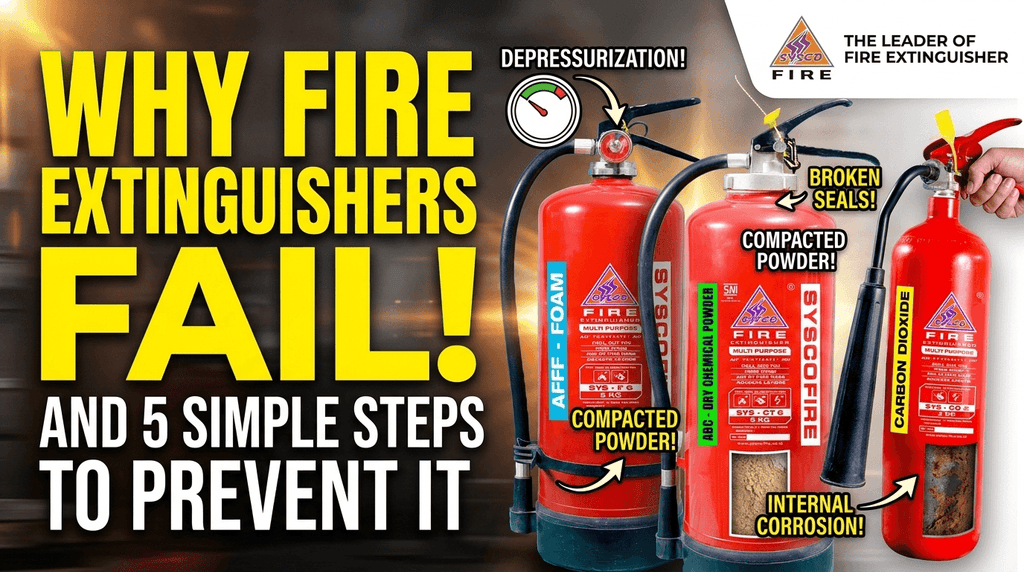
1. Silent Loss of Pressure (Depressurization)
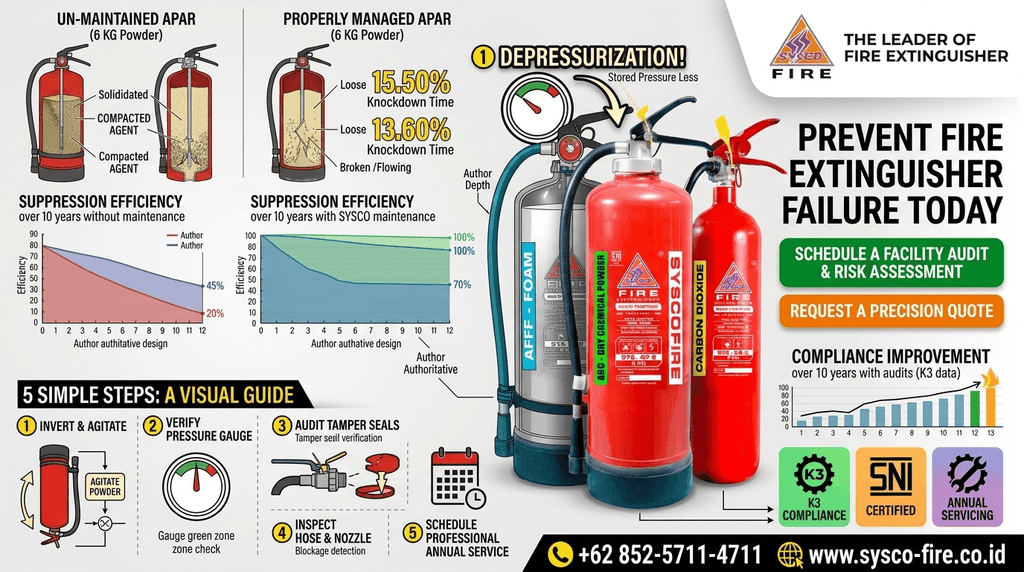
Most modern extinguishers are “stored-pressure” units, meaning the extinguishing agent is forced out by a compressed propellant gas (typically nitrogen or dry air). This pressure is a vital energy source. Over time, micro-leaks can develop around valve assemblies, seals, or the pressure gauge stem. Even a slow, undetectable leak can silently deplete the cylinder’s pressure, rendering the unit powerless in an emergency.
2. Physical Tampering and Vandalism
Fire extinguishers are frequently installed in highly accessible public or industrial areas. Accidental impacts from machinery, intentional vandalism, or misuse can damage delicate valve handles, discharge hoses, or nozzles. A missing safety pin or anti-tamper seal can go unnoticed until a user tries to discharge a non-functional or partially-discharged unit.
3. Degradation of Hoses and Internal Blockages
Flexible discharge hoses are susceptible to environmental degradation, including dry rot from tropical humidity, cracking from direct UV exposure, or blockages by insects or debris. If the hose or nozzle is obstructed, the extinguishing agent cannot flow, leading to a catastrophic discharge failure.
4. Chemical Agent Compaction and Settling
This is a critical failure mode specifically for ABC Dry Chemical Powder units (the most common type in Indonesia). Dry powder agents can settle and compact inside the cylinder due to long-term exposure to facility vibrations or high ambient humidity. When compacted, the powder behaves like a solid, preventing it from fluidizing and discharging effectively through the hose when the trigger is squeezed.
5. Hidden Internal and External Corrosion
Extinguishers installed in harsh environments—such as chemical manufacturing, coastal regions with high salt levels, or exterior locations exposed to weather extremes—are prone to corrosion. Severe rust on the cylinder base, weld seams, or valve connections can compromise the pressure vessel’s structural integrity, creating serious explosion risks during discharge attempt.
5 Simple Steps to Guarantee Fire Readiness: A Failure Prevention Protocol
Active fire protection requires proactive management. Under Indonesian K3 (Keselamatan dan Kesehatan Kerja) regulations—specifically Permenaker No. 04/1980—facility managers and safety officers are legally responsible for implementing routine inspection protocols.
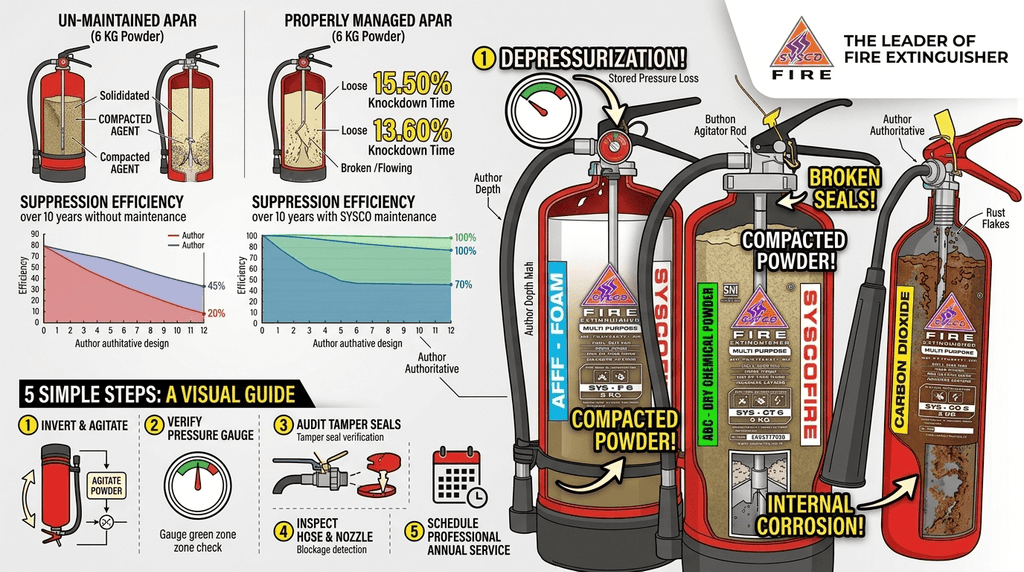
Utilize these 5 simple steps for robust Fire Extinguisher Failure Prevention:
Step 1: Execute Rigorous Monthly Facility Audits
Do not rely solely on annual servicing. Mandate that K3 personnel or trained facility auditors conduct comprehensive visual inspections of every APAR unit every single month.
- Audit Points: Verify the Top Handle is accessible and not obscured by storage. Confirm directional APAR signage is visible. Inspect the cylinder shell for severe dents, leaks, or hidden rust. Log these audits in a central maintenance register.
Step 2: Instantly Act on Pressure Gauge Red Flags
For stored-pressure units, the pressure gauge is a vital health indicator. Instruct auditors to focus intensely on the gauge needle during monthly checks.
- Critical Action: The indicator pin must sit squarely inside the green operational zone. If the needle points to the red segment on the left (depressurized) or the right (overpressurized hazard), immediately remove the unit from service for professional maintenance or replacement.
Step 3: Audit Safety Seals and Locking Pins
The safety pin and the breakable anti-tamper seal serve as the primary proof of readiness and non-tampering.
- Critical Action: Confirm that the stainless steel locking pin is correctly inserted through the lever handles. Verify the plastic or wire seal is intact. A broken seal or missing pin signifies that the unit may have been partially discharged or vandalized, requiring immediate removal for professional servicing.
Step 4: Actively Prevent ABC Powder Compaction
If your facility predominantly uses ABC Powder extinguishers, you must implement a simple agitation routine to maintain agent fluidity.
- Maintenance Task: During monthly audits, instruct auditors to gently invert and shake each powder extinguisher. This simple, no-cost agitation prevent dry powder from settling and compacting, ensuring it remains fluid and ready for immediate discharge.
Step 5: Prioritize Annual Professional Servicing and Hydro-testing
Routine facility checks are vital, but they cannot replace technical expertise and depth of inspection offered by authorized fire safety professionals.
- Regulatory Mandate: Ensure all extinguishers undergo thorough annual servicing by certified technical personnel. Additionally, all pressure cylinders require mandatory periodic hydrostatic testing (typically every 5 to 12 years depending on cylinder type) to confirm structural integrity against pressure-vessel failure.
Choosing Sysco Fire Indonesia for Industrial-Grade Protection
Executing a fail-safe fire safety protocol requires high-quality, dependable active fire protection equipment and technical maintenance support. In high-risk industrial plants, commercial facilities, and residential complexes across Indonesia, compromising on safety hardware is never an option.
Sysco Fire is a trusted industry leader and manufacturer, delivering uncompromising fire protection solutions engineered for industrial demands:
- Official SNI & K3 Compliance: Every APAR unit manufactured by Sysco Fire strictly adheres to Indonesian National Standards (SNI) and ministerial directives, ensuring seamless approval during safety audits.
- Corrosion-Resistant Engineering: Sysco Fire cylinders utilize high-tensile steel bodies, heavy-duty brass valves, and specialized polymer linings to provide maximum protection against harsh Indonesian climates.
- Full Servicing and Recharge Support: We provide comprehensive inspection, refilling, hydro-testing, and technical consultancy services to maintain the long-term reliability of your critical infrastructure protection.
Conclusion
A critical moment should never arrive where a portable fire extinguisher unhooks from a wall and fails to perform. By understanding the leading technical causes of Fire Extinguisher Failure Prevention—including depressurization, agent compaction, and corrosion—facility managers can implement robust, simple prevention protocols. Partnering with Sysco Fire guarantees access to certified, industrial-grade equipment and expert support required to keep your workforce, property, and capital investments fully protected.
Equip your facility with professional-grade fire defense and expert guides today.
Baca juga : Jangan Tunggu Insiden Terjadi! 11 Checklist Evaluasi HSE Tahunan yang Wajib Diperiksa.
Explore Our Official Catalog and Connect with Our Experts
Ready to secure your facility with certified APAR units, expert Guides on Fire Extinguisher Failure Prevention, and full technical support? Explore our official manufacturer catalog and connect with our dedicated team today.
- Visit Our Official Website: Discover our manufacturing standards, corporate history, and full active fire portfolio at https://sysco-fire.co.id.
- Browse Our Full Product Catalog: Review specifications, capacities, and ratings for ABC Dry Powder, CO2, Foam, and Clean Agent APARs at https://sysco-fire.co.id/Promo.
- Speak With Our Safety Consultants: Need a facility risk audit, technical guidance, or procurement quote? Contact our service desk via WhatsApp at +62 852-5711-4711 or click here for direct assistance: https://sysco-fire.co.id/cs.