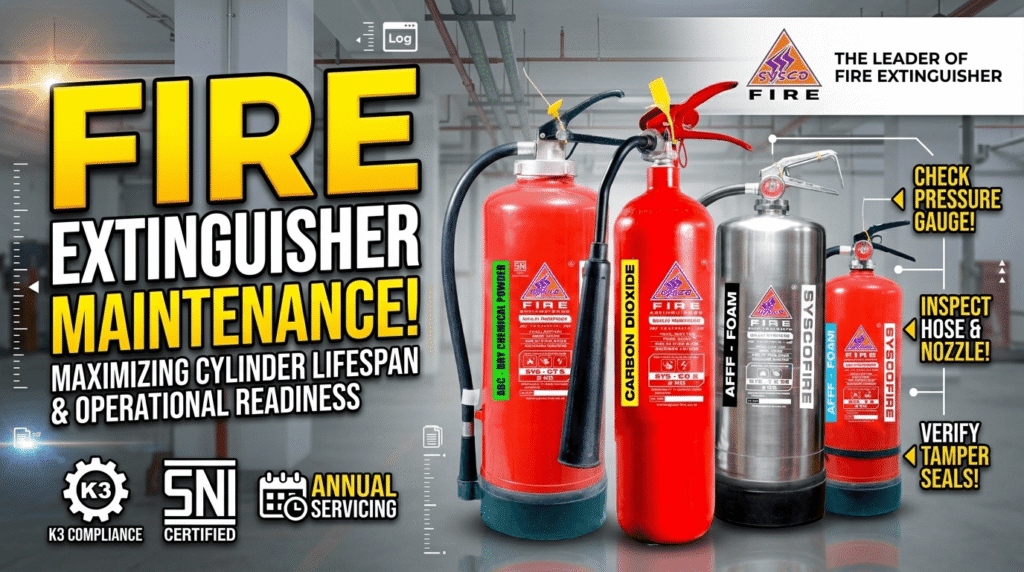
A fire extinguisher—known across Indonesia as APAR (Portable Fire Extinguisher)—is a silent guardian mounted on facility walls, pillars, and emergency exit routes. Because it sits idle for months or even years waiting for a worst-case scenario, it is easy to assume it will perform flawlessly the moment a fire breaks out. In reality, a fire extinguisher is a precision mechanical and pressurized device exposed to ambient humidity, temperature swings, industrial dust, vibration, and chemical aging.
Without disciplined Fire Extinguisher Maintenance, subtle wear can quietly compromise a unit long before an emergency occurs. Pressure gauges can drift into the red or overcharged zones, dry chemical powders can cake or settle at the bottom of a cylinder, hoses can crack or become clogged by insects, and corrosion can attack cylinder walls or valve assemblies. When seconds matter most, an unmaintained extinguisher can hesitate, lose range, or fail completely.
Under Indonesian occupational safety regulations—specifically Permenaker No. 04/1980—alongside SNI (Standar Nasional Indonesia) principles and international best practices such as NFPA 10, routine inspection and scheduled servicing are mandatory requirements for commercial buildings, factories, warehouses, hotels, and hospitals. this guide explains how preventive maintenance protects cylinder longevity, guarantees emergency readiness, and keeps your facility audit-ready.
Table of Contents
Why Preventive Maintenance Matters Beyond Compliance
Many facility managers treat extinguisher servicing strictly as a checkbox for K3 (Keselamatan dan Kesehatan Kerja) audits or fire insurance renewals. While regulatory compliance is essential, proactive care delivers far greater operational value:
1. Maximizing Cylinder Lifespan and Total Cost of Ownership
Steel and alloy pressure vessels represent a significant capital investment. Preventing external and internal rust, protecting valve threads, and addressing minor seal wear early extends the usable life of quality cylinders and reduces premature replacements.
2. Guaranteeing Instant, Reliable Discharge During Emergencies
A fire in its incipient stage can be controlled rapidly with a properly pressurized, freely discharging APAR. Preventive upkeep verifies that internal pressure is accurate, safety pins and tamper seals are intact, hoses are unobstructed, and extinguishing media remain free-flowing.
3. Protecting People, Assets, and Business Continuity
A single uncontained fire can halt production lines, damage high-value equipment, endanger staff and visitors, and trigger severe legal and financial fallout. Reliable fire readiness is a core pillar of operational resilience.
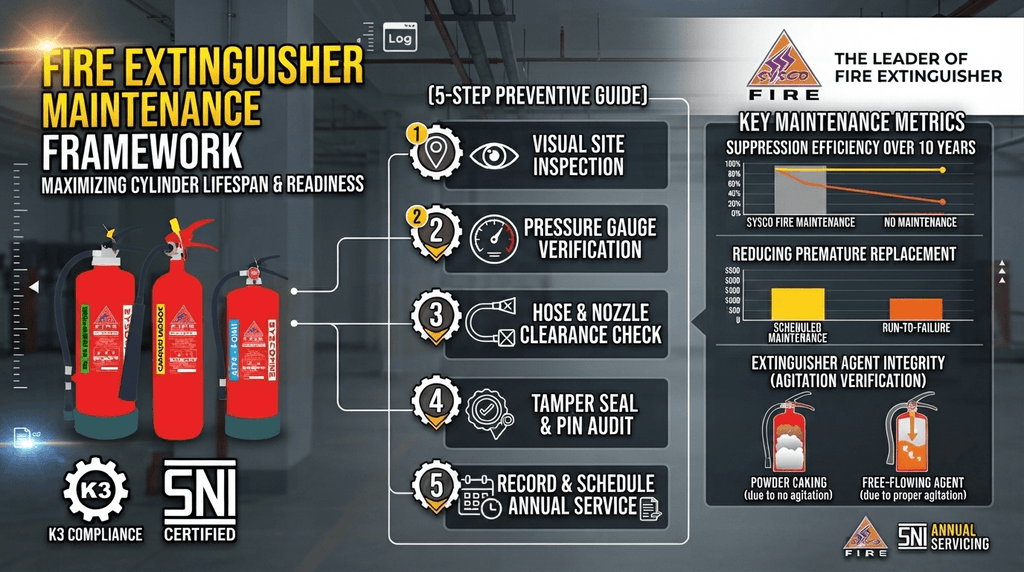
The Multi-Tiered Maintenance Framework for APAR & APAB Units
Effective Fire Extinguisher Maintenance operates on a structured schedule rather than ad-hoc checks. Each interval targets different mechanical, chemical, and structural aspects of the unit:
1. Monthly Visual Checks (Internal Safety / HSE Team)
Designed to catch obvious physical issues, obstruction, or tampering quickly:
- Confirm the unit is in its designated location, unobstructed, and clearly visible with proper signage.
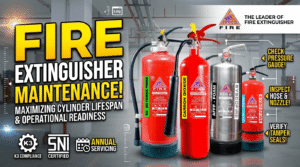
- Check that the pressure gauge needle (on stored-pressure units) sits squarely in the green operating zone.
- Verify that the safety pin, pull ring, and tamper indicator are intact and undamaged.
- Inspect the cylinder body, hose, and nozzle for dents, rust, leaks, cracks, or blockages.
- Ensure the inspection tag or log is updated with the date and inspector initials.
2. Semi-Annual / Annual Professional Servicing (Certified Technicians)
Performed by trained fire safety technicians to verify internal condition and mechanical function:
- Conduct a thorough physical and mechanical examination of the cylinder, valve assembly, hose, and nozzle/horn.
- Check weight and pressure integrity (including weighing CO2 cylinders, which do not use standard dial gauges, against stamped tare/gross weights).
- Gently agitate or invert dry chemical powder cylinders where appropriate to prevent compaction and settling.
- Replace worn seals, O-rings, or damaged components using compatible parts, and update official service records.
3. Periodic Hydrostatic Testing & Internal Reconditioning
High-pressure cylinders undergo specialized pressure testing at mandated intervals (typically every 5 years depending on extinguisher type and standard) to confirm vessel integrity and safety under internal stress. Any cylinder showing severe corrosion, structural damage, or failed pressure testing must be retired and replaced rather than risked in service.
How Extinguishing Media Influence Maintenance Priorities
Different fire classes and environments require tailored extinguishing agents—and each medium behaves differently over time:
- ABC Dry Chemical Powder: Versatile for Class A, B, and C hazards, but moisture ingress or prolonged vibration can cause powder clumping or caking. Periodic mechanical checks and dry storage conditions are crucial.
- Carbon Dioxide (CO2): Ideal for electrical panels, server rooms, and sensitive equipment because it leaves no residue. Because CO2 is stored under high pressure as a liquefied gas, periodic weight verification and valve/horn inspection are vital.
- AFFF Foam: Effective for flammable liquid (Class B) and ordinary combustible (Class A) risks. Technicians check for leaks, corrosion protection, and proper discharge nozzle condition.
- Clean Agent: Chosen for high-value electronics and data centers where clean suppression is essential; requires strict leak-tightness and certified servicing protocols.
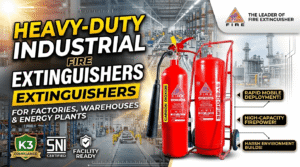
- Wheeled Units (APAB): High-capacity systems (Alat Pemadam Api Berat) for large industrial zones require extra attention to wheel bearings, chassis integrity, long discharge hoses, and control valves so a single operator can deploy them smoothly.
Common Maintenance Pitfalls That Undermine Readiness
Even facilities with good intentions often fall into avoidable traps:
- Relying Only on Gauge Glances: A green gauge does not guarantee a clear nozzle, an un-kinked hose, or free-flowing powder inside the cylinder.
- Ignoring Environmental Stressors: Coastal salt air, high humidity, chemical fumes, and heavy machinery vibration accelerate corrosion and wear faster than mild indoor office conditions.
- Using Non-Standard Parts or Unverified Refills: Inferior replacement parts or uncalibrated servicing can compromise pressure retention and compliance during inspections.
- Incomplete Documentation: Missing or outdated maintenance logs create headaches during K3 audits, safety reviews, and insurance assessments.
Why Choose Sysco Fire for Reliable Equipment & Maintenance Support
When your facility’s safety depends on equipment performing under pressure, partnering with an established manufacturer and service specialist makes all the difference. Sysco Fire supports commercial and industrial organizations across Indonesia with dependable products and technical fire protection services built around SNI and Permenaker No. 04/1980 compliance.
From portable APARs and heavy-duty wheeled APAB units to routine servicing, refilling, and consultation, Sysco Fire helps you maintain consistent readiness and clear documentation across every zone of your operation.
Conclusion
Consistent Fire Extinguisher Maintenance turns passive safety equipment into dependable emergency protection. By combining monthly visual checks, scheduled professional servicing, and timely pressure testing, you extend cylinder lifespan, maintain regulatory compliance, and ensure every unit is ready when it counts most.
Baca juga : Don’t Just Buy! 11 Tips for Choosing a Trusted Fire Extinguisher in Tandes District.
Connect With Sysco Fire
Looking for reliable fire protection equipment, technical guidance, or professional servicing for your facility? Reach out through our official channels:
- Official Manufacturer Website: Learn more about Sysco Fire and our fire protection solutions at https://sysco-fire.co.id.
- Product Catalog: Explore complete APAR and fire extinguisher specifications at https://sysco-fire.co.id/apar-alat-pemadam-api-kebakaran.
- WhatsApp Consultation: Contact our customer service team at +62852-5711-4711 via https://sysco-fire.co.id/cs for product inquiries, maintenance support, and quotes.