
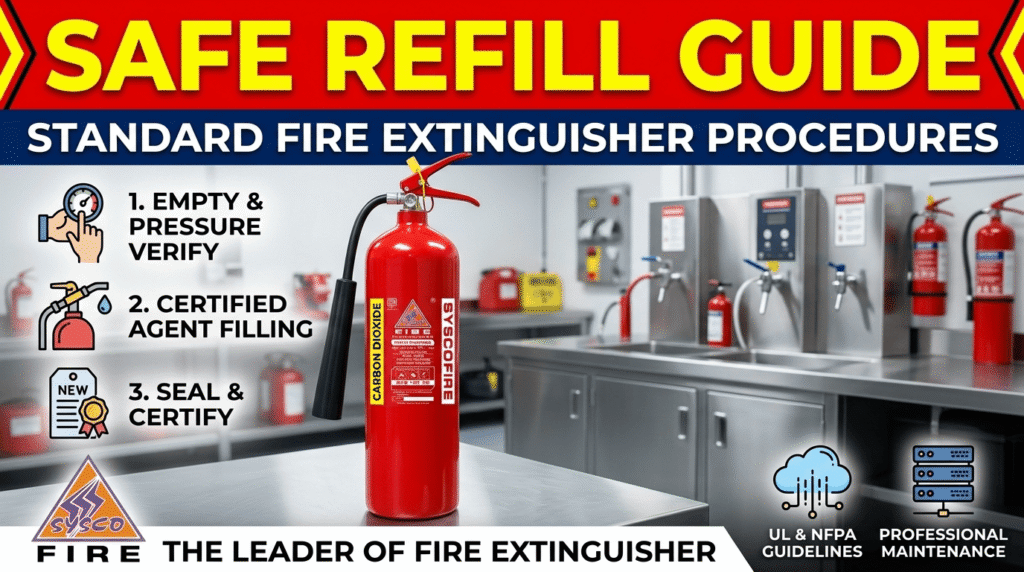
A fire extinguisher, known commonly in Indonesia as an APAR (Alat Pemadam Api Ringan), is one of the most critical pieces of safety equipment in any building. It stands silently on the wall, offering a vital line of defense against unexpected emergencies. However, a common and dangerous misconception is that once a fire extinguisher is purchased, it is good forever. The reality is that fire extinguishers require meticulous maintenance, and most importantly, they must be properly refilled (recharged) to ensure they function perfectly when lives and property are on the line.
Whether you have just used your extinguisher to put out a small trash can fire, or it has simply been sitting in the hallway for several years, understanding the standard procedures for safely refilling a fire extinguisher is paramount. In this comprehensive guide, we will explore exactly when an extinguisher needs refilling, the severe risks of attempting it yourself, and the rigorous, step-by-step standard operating procedures that certified professionals follow to keep your facility safe.
Table of Contents
When Do You Need to Refill a Fire Extinguisher?
Knowing when to initiate the refill process is the first step in responsible fire safety management. You should never wait for a scheduled annual inspection if you notice any of the following conditions:
1. Immediately After Any Use
This is the most critical rule of fire extinguisher maintenance: if you use it, even just for a brief one-second burst, it must be refilled immediately. When an extinguisher is discharged, the internal pressure drops. Furthermore, the dry chemical powder or extinguishing agent can get trapped in the valve mechanism. This prevents the valve from sealing completely, causing the remaining propellant gas (usually nitrogen) to leak out slowly over the next few days. A partially used extinguisher is essentially an empty extinguisher.
2. When the Pressure Gauge is Low
Make it a habit to check the small circular pressure gauge on your APAR unit once a month. The yellow needle must be pointing straight up, directly inside the green zone. If the needle has drifted to the left into the red “Recharge” zone, it means the cylinder has lost its internal pressure. Without this pressure, the chemical agent will not spray out, rendering the unit useless.
3. Routine Maintenance and Statutory Intervals
Even if an extinguisher has never been used and the gauge reads perfectly in the green, the extinguishing agents inside can degrade, settle, or pack down (caking) over time. Fire safety standards, such as those outlined by the National Fire Protection Association (NFPA) and local fire codes, dictate mandatory maintenance schedules. For example, standard Dry Chemical (ABC) extinguishers typically require an internal inspection and complete teardown/refill every six years, and a more rigorous hydrostatic test every twelve years.
The Dangers of DIY: Why You Must Use a Certified Professional
With the rise of internet tutorials, some facility managers or homeowners might be tempted to save money by attempting a “DIY” fire extinguisher refill. This is incredibly dangerous and highly discouraged by fire safety authorities worldwide.
Fire extinguishers are essentially highly pressurized metal vessels. Refilling them requires specialized equipment to safely handle compressed nitrogen gas and specific chemical agents. Improperly pressurizing a cylinder can lead to a catastrophic explosion, causing severe injury or death. Furthermore, if you use the wrong type of powder, fail to replace the microscopic O-rings, or cross-thread the valve, the extinguisher will fail when you need it most.
Additionally, from a legal and insurance standpoint, only certified fire protection technicians can legally tag and certify an extinguisher. If a fire occurs and investigators find that an uncertified individual refilled the equipment, your insurance claims will likely be denied, and you could face severe liability issues.
The Standard Operating Procedure (SOP) for Refilling an APAR
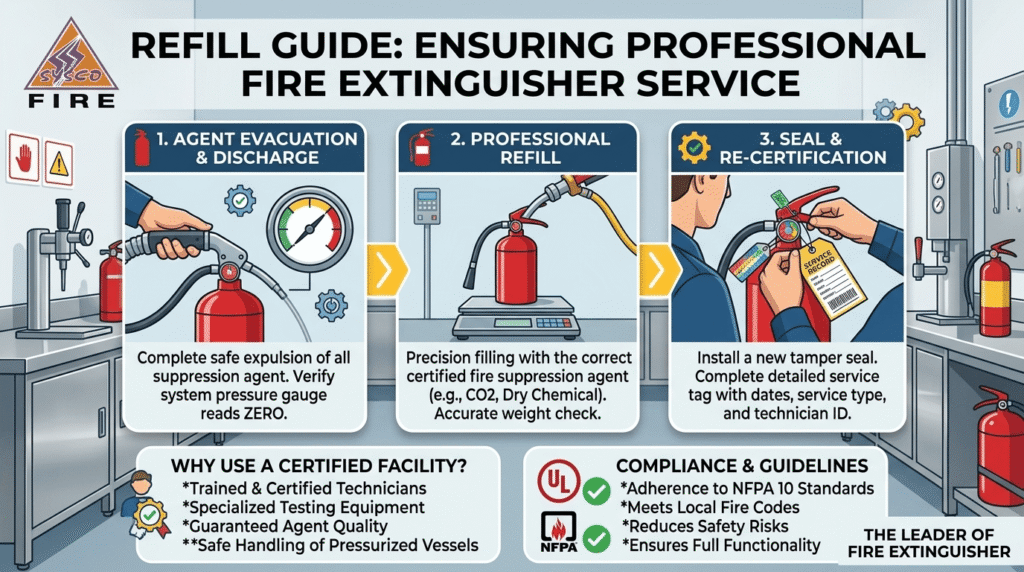
When you hand your fire extinguisher over to a reputable, certified fire protection company, they do not just pour new powder into the top. A professional refill—often called a “recharge”—is an intricate, multi-step process designed to guarantee 100% reliability. Here is the standard procedure compliant with E-E-A-T (Experience, Expertise, Authoritativeness, and Trustworthiness) industry standards:
Step 1: Visual Inspection and Safe Depressurization
Before any work begins, the technician performs a thorough visual inspection of the exterior cylinder to check for severe rust, dents, or signs of physical compromise. If the unit passes the visual check, the technician must safely evacuate any remaining pressure. This is done by discharging the remaining propellant into a safe, filtered recovery system so that dry chemicals are not released into the atmosphere.
Step 2: Complete Teardown and Valve Removal
Once completely depressurized, the technician carefully unscrews the main valve assembly from the top of the cylinder. The remaining extinguishing agent (like ABC powder) is emptied. The technician will then disassemble the entire valve mechanism, separating the spring, the valve stem, and the siphon tube.
Step 3: Thorough Cleaning and Part Replacement
This is a crucial step that separates professional work from amateur attempts. The internal threads of the cylinder and the entire valve assembly are meticulously cleaned to remove any caked-on powder. Leftover powder on the valve seating will cause slow pressure leaks later. The technician will discard the old neck O-ring and valve stem O-rings, replacing them with brand new, factory-approved seals to ensure a perfect, airtight fit.
Step 4: Internal Cylinder Inspection
With the cylinder empty and open, a specialized inspection light is lowered into the tank. The technician looks for internal pitting, corrosion, or moisture damage. If moisture has entered a dry chemical extinguisher, it can cause the metal to rust from the inside out, creating a massive explosion hazard. If the internal inspection reveals damage, the cylinder is condemned and must be replaced.
Step 5: Refilling the Extinguishing Agent
If the cylinder is pristine, it is time for the refill. The technician places the empty cylinder on a highly calibrated digital scale. Using a specialized closed-loop filling hopper, the exact, manufacturer-specified weight of the appropriate extinguishing agent (e.g., premium monoammonium phosphate for ABC units) is added to the cylinder. It is critical that the exact weight is met—too little agent compromises firefighting capability, while too much can prevent proper pressurization.
Step 6: Reassembly and Pressurization
The newly cleaned valve assembly, fitted with the new siphon tube and O-rings, is carefully threaded back onto the cylinder and torqued to the manufacturer’s precise specifications. Next, the cylinder is connected to a pressurized gas source. For standard dry chemical units, medical-grade or strictly dry Nitrogen gas is used. Air compressors are never used, as standard air contains moisture which will ruin the powder. The unit is pressurized to the exact PSI indicated on the gauge (usually around 195 PSI).
Step 7: Rigorous Leak Testing
Once pressurized, the technician must ensure the unit holds that pressure. The standard procedure involves a “water bath” test or the application of specialized leak-detection fluid around the neck, the pressure gauge threads, and the nozzle. If even a microscopic bubble forms, the unit must be depressurized and the seals checked again.
Step 8: Final Tagging and Certification
After passing the leak test, the extinguisher is wiped down and a new nozzle or hose is attached. The technician inserts a new metal safety pin and secures it with a color-coded tamper seal (often called a zip tie). Finally, a new certification tag is attached. This tag is the technician’s signature, indicating the date of service, the type of service performed, and the weight of the unit, verifying that it meets all national safety regulations.
Conclusion
Maintaining a ready-to-use fire extinguisher is not just a matter of regulatory compliance; it is a fundamental commitment to safety and survival. Understanding the rigorous standard procedures involved in refilling an APAR highlights exactly why this task must be left to certified professionals. From meticulous cleaning and O-ring replacement to precise nitrogen pressurization and leak testing, every step is designed to ensure that when you pull the pin in an emergency, the extinguisher works flawlessly. Never compromise on fire safety—check your gauges regularly, and schedule professional refills immediately after use or when statutory maintenance is due.
Baca juga : Tingkat Training Damkar Kemnaker: 4 Level Kompetensi yang Wajib Dipahami Sebelum Sertifikasi.
Partner with Sysco Fire for Certified Safety Solutions
Don’t leave your facility’s safety to chance. Whether you need a professional, certified refill for your existing APAR units, or you are looking to upgrade your fire safety infrastructure, trust the experts.
For industry-leading fire protection solutions and professional servicing, visit the officia https://sysco-fire.co.id.
If you are looking to purchase new, high-quality, and certified fire extinguishers, browse our complete range at the https://sysco-fire.co.id/Promo.
Need immediate assistance with refilling your APAR or want to schedule a maintenance consultation? Our certified technicians are ready to help. Contact us today via WhatsApp at +62852-5711-4711 for fast, reliable customer support.